4876
Published on January 25, 2026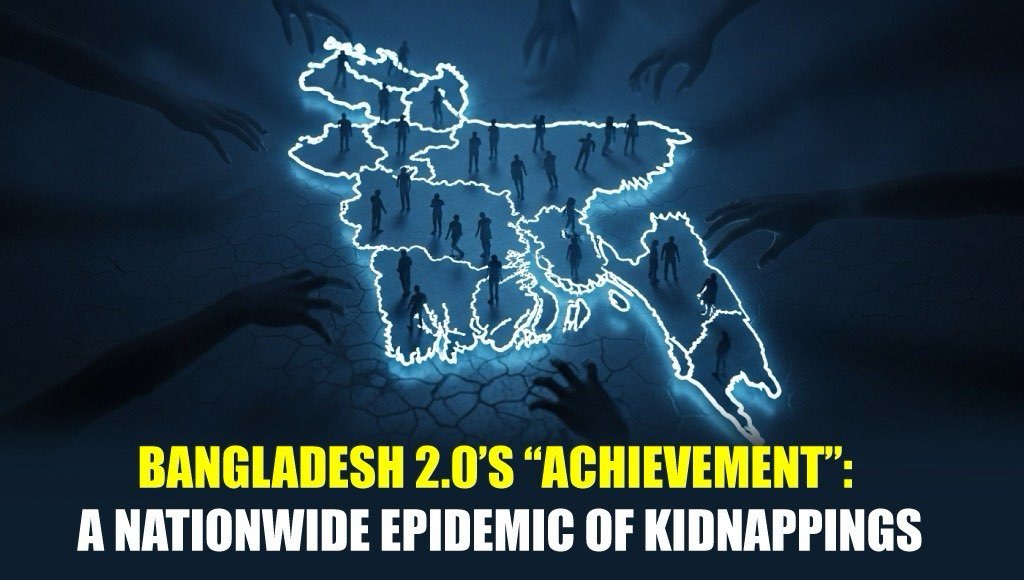
The security landscape in Bangladesh has taken a dark turn. Recent reports highlight a chilling trend: kidnapping has transitioned from isolated criminal acts into an organized, nationwide business. From a sub-assistant engineer in Bogura forced to pay ransom twice to the tragic murder of Cambrian College student Sudipto Roy over an unpaid 8-million-taka demand, the reality of kidnapping in Bangladesh has become a nightmare for ordinary citizens.
The numbers reveal a catastrophic decline in public safety. In 2021, the country recorded 445 kidnapping cases. By 2025, that figure skyrocketed to 1,005 cases—more than double in just four years.
Data from police headquarters indicates that the surge intensified during periods of political transition. July 2025 alone saw 109 cases, coinciding with the installation of the interim government led by Muhammad Yunus. Since then, monthly figures have remained alarmingly high:
October 2025: 110 cases
November 2025: 93 cases
December 2025: 87 cases
The geographical spread of these crimes suggests a systemic failure. The hills of Teknaf and Ukhiya in Cox’s Bazar have emerged as safe havens for abductors, particularly during the dry season. However, the crisis is not limited to rural borders.
Statistics show that over half of all abductions occur in the country's economic heartlands:
Dhaka Division & Metropolitan: 403 cases
Chattogram Division: 203 cases
The fact that citizens are no longer safe in commercial hubs points toward a total breakdown of the law enforcement apparatus.
Critics argue that the current administration’s lack of an electoral mandate has led to a lack of accountability. Dr. Touhidul Haque, a crime analyst at Dhaka University, notes that victim families often feel their pleas for help vanish into thin air.
While the police frequently categorize these incidents as "financial disputes," the sheer volume of abductions suggests a deeper issue: the absence of the rule of law. When a government is not beholden to the voters, the safety of those voters often becomes a secondary concern.
Behind every statistic is a grieving family. The shift in 2025 highlights that kidnappings are no longer driven by personal vendettas but by cold, financial extortion and land grabbing.
The interim government’s critics suggest that the focus on maintaining power through foreign backing and non-democratic means has left the gates open for militant groups and criminal syndicates. For the families of the abducted, the "change" promised in July has resulted in nothing but insecurity, extortion, and the loss of loved ones.
As the crime rate continues to climb, the question remains: how much longer can the citizens of Bangladesh endure this climate of fear?










This work is copyrighted and authorized by the Bangladesh Awami League. You may download, display, print and re-produce this material in unaltered form only (retaining this notice)for your personal, non-commercial use or use within your organization.
