3316
Published on April 11, 2026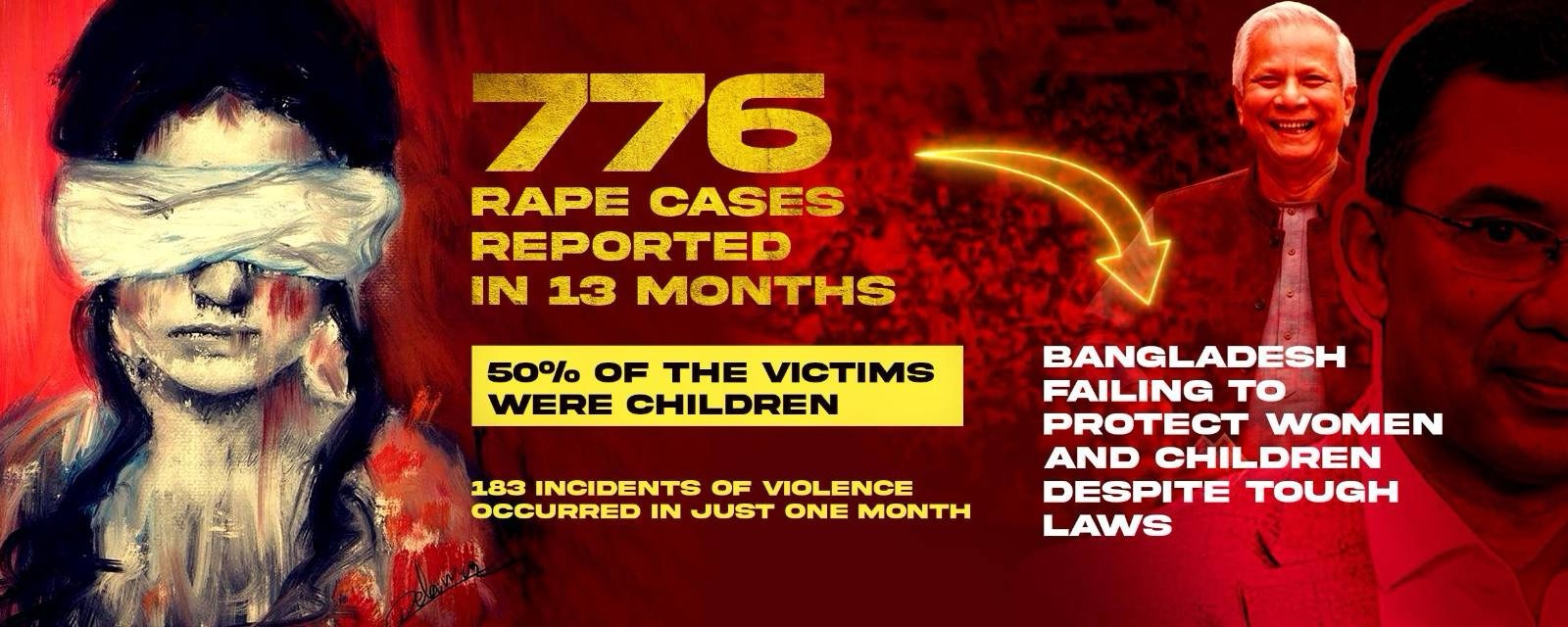
Despite the presence of stringent legislation such as the Women and Children Repression Prevention Ordinance, the situation on the ground in Bangladesh has shown little improvement over the past year, according to critics.
They say that in the 13 months leading up to February 2026, a total of 776 rape cases were reported, raising serious concerns about public safety. The figures come despite successive governments pledging to ensure the security of women and girls.
The criticism extends to both the interim administration led by Muhammad Yunus and the current government under the Bangladesh Nationalist Party, with allegations that both have failed to address the issue effectively.
Observers argue that many advisers in the Yunus-led administration had backgrounds in non-governmental organisations and were previously active in advocacy efforts—organising protests, human chains, and roundtable discussions—to push for stronger protections for women. However, critics say that once in power, their efforts fell short, with laws introduced but enforcement mechanisms weakened or left ineffective.
Concerns have also been raised about the state of One-Stop Crisis Centres, which had previously played a key role during the tenure of the Awami League government. These centres are now reportedly struggling to function effectively.
Law enforcement has come under scrutiny as well. Critics point to a lack of accountability following attacks on police during the July militant violence, saying that the Yunus administration did not pursue justice. They also allege that the current BNP-led government has taken limited steps to restore police morale or strengthen enforcement.
There are further claims that individuals linked to the current administration secured influential positions within the police and judiciary even before the elections, yet have not demonstrated effectiveness in ensuring the rule of law.
In some areas, the handling of cases involving violence against women is said to have been left to informal village arbitration systems, rather than formal judicial processes—raising concerns about accountability and justice.
Analysts say the contrast between tough legal provisions and the reported number of cases highlights a significant gap between legislation and its implementation. They warn that such gaps may have contributed to preventable tragedies, including cases involving a teenage girl in Narsingdi and a seven-year-old child in Sitakunda.
The situation, they argue, underscores broader questions about governance, accountability, and the political will required to address violence against women and children in Bangladesh.






This work is copyrighted and authorized by the Bangladesh Awami League. You may download, display, print and re-produce this material in unaltered form only (retaining this notice)for your personal, non-commercial use or use within your organization.
