10369
Published on August 12, 2026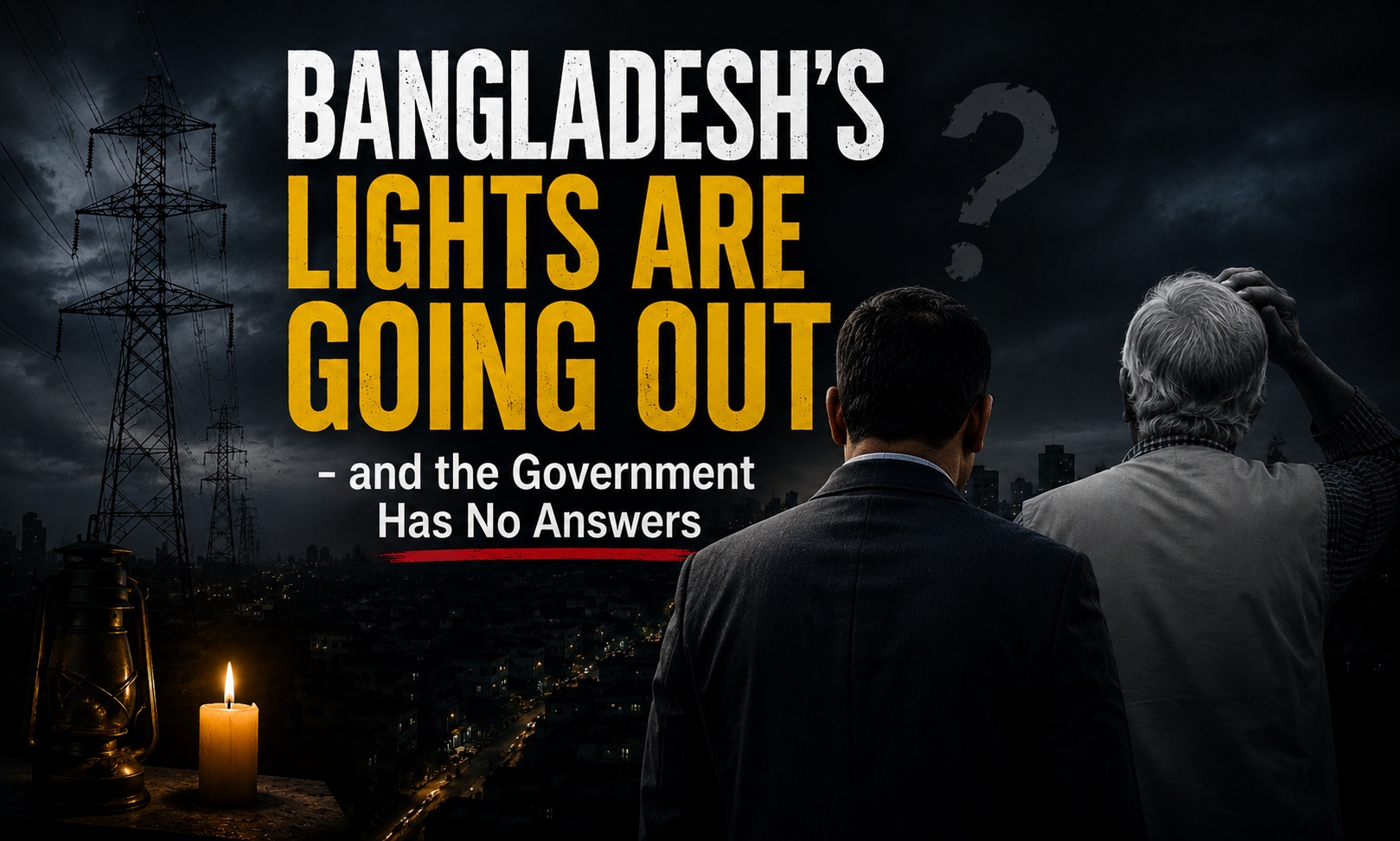
Today, that modern reality has been brutally extinguished.
Under the newly elected BNP government, building directly upon months of fatal policy inertia inherited from the preceding interim administration, the nation has been plunged into an unprecedented energy catastrophe. Power outages lasting anywhere from six to twelve hours a day have transformed daily life into a desperate struggle for survival.
Load shedding off the charts once again
The crisis is no longer a temporary inconvenience; it is a full-blown systemic collapse. As record-setting power deficits paralyze major cities and regional districts alike, one question echoes across the global community: Can a civilized, developing nation truly function under such complete institutional failure?
Record Load Shedding: Many Areas Without Electricity for 10 Hours
The statistical reality of Bangladesh’s power grid reveals an even more devastating picture of policy failure and structural breakdown.
Record-Breaking Deficit: The national electricity shortfall has breached 3,670 MW, with peak demand touching 16,059 MW against a maximum practical generation of barely 12,388 MW.
Gas-Fired Collapse: Facilities capable of producing 10,000 MW are idling below 3,500 MW due to unmanaged natural gas deficits and LNG import bottlenecks.
LNG terminal shutdown squeezes gas supplies, power generation and households alike
Industrial Disruption: Over 40% of small-to-medium enterprises (SMEs) and textile units report significant operational downtime, directly threatening the country’s export engine.
Cross-Border Supply Reductions: Electricity imports from India's Adani Power were allowed to drop by 50% (from ~1,600 MW down to ~815 MW) amid unaddressed supply chain disruptions and unpaid dues.
Load-shedding soars as Payra, Adani supplies fall

Fuel shortage cuts power generation, increases load-shedding
The human and economic toll is immediate and brutal. And the damage is no longer abstract.
Ordinary life has been reduced to a daily calculation of heat, darkness and scarcity. Families lose sleep. Small shops close early. Cooking and basic routines are disrupted for hours at a stretch.
Unbearable load-shedding leaves Sylhet residents frustrated
Education has been hit hard. Students across rural and semi-urban areas study by phone light or abandon evening work entirely. Digital learning tools built over the past decade are rendered useless during the longest cuts.
Industry and factories are losing production hours and competitiveness. Garment units in industrial belts report repeated multi-hour stoppages. Rice mills sit idle. Semi-intensive shrimp farms in Khulna face oxygen crashes when aerators fail, risking entire stocks. Irrigation pumps stop in Rajshahi and Natore. Manufacturers already coping with gas shortages now face a second energy failure, raising diesel costs and delaying export shipments.
Healthcare operates under elevated risk. Regional hospitals and clinics depend on diesel generators for intensive care, surgery and vaccine cold chains. In a system still expanding its capacity, this is a direct threat to patient safety.
The broader economy absorbs the cumulative hit. Bangladesh’s growth model rests on manufacturing, agriculture and reliability for foreign buyers. Persistent shortages raise costs, deter investment and erode the credibility the country has spent years building.
Roads blocked in Sunamganj over frequent power outages
How did a country with tens of thousands of megawatts of installed capacity reach this point?
Gas supply to power plants has fallen sharply, at times to around 650–700 million cubic feet per day against higher needs, after disruptions at an LNG terminal.
Coal handling has been hampered by weather and logistics, cutting output from plants such as Payra and reducing imports from Adani.
Liquid-fuel plants are expensive to run, so authorities limit them even as shortfalls mount.
The result: more than half the installed capacity often sits idle while the lights go out.
The interim government that took power after 2024 failed to stabilise fuel supply chains or clear the structural bottlenecks it inherited. The BNP government, now several months into office, has offered little more than temporary fixes and explanations about rain and maintenance. Protests are spreading. Frustration is boiling over in the heat.
Can a country that aspires to middle-income status and presents itself as a manufacturing hub function like this? A civilised, developing nation cannot ask its citizens to live with multi-hour daily blackouts, force its students to study by candlelight, or compel its factories to burn costly diesel just to stay afloat. Energy security is not a luxury. It is the foundation of modern life, education, industry and healthcare.
The numbers are public. The suffering is visible. The protests are real. Bangladesh’s current rulers, first the interim administration and now the elected BNP government, have allowed a solvable crisis to deepen into a national emergency. The lights are going out. The question is how much longer the public will tolerate the darkness.







This work is copyrighted and authorized by the Bangladesh Awami League. You may download, display, print and re-produce this material in unaltered form only (retaining this notice)for your personal, non-commercial use or use within your organization.
