13232
Published on May 24, 2026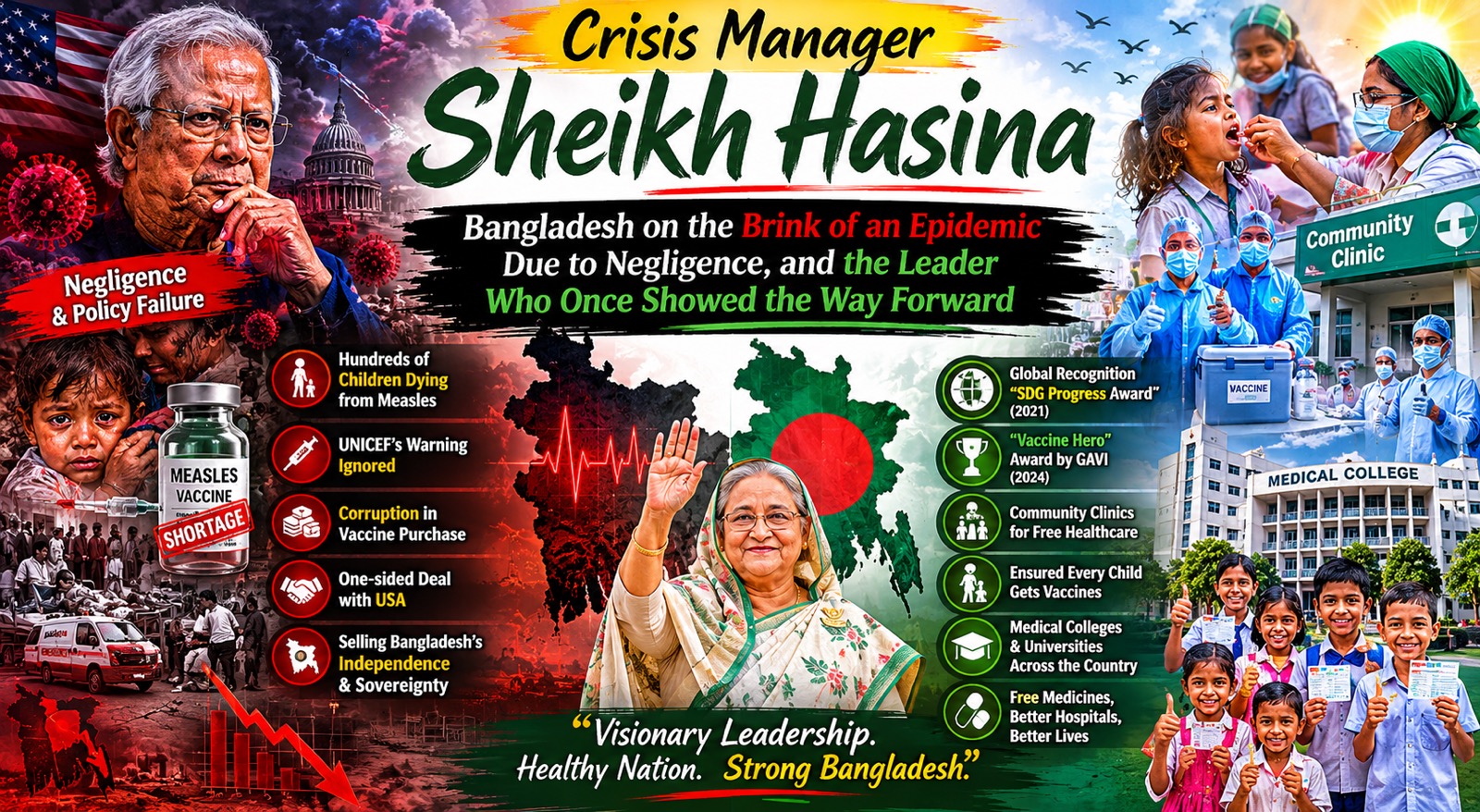
History will bear witness that on one side stood Bangladesh’s extraordinary success in confronting a global pandemic like COVID-19 under the visionary leadership of Sheikh Hasina, while on the other side stands the gross negligence and policy failures of the interim government led by Dr. Muhammad Yunus, which has now pushed the country to the verge of being overwhelmed by a measles outbreak. At a time when the world praised Bangladesh as a model for vaccination success, children are now dying in large numbers due to vaccine shortages under this government. UNICEF’s warning has now confirmed that this crisis was not an accident—it was the result of Yunus’s deliberate negligence and destruction.
Due to the negligence of the interim government led by Yunus, the measles outbreak has taken a devastating turn. According to the latest official data from the Directorate General of Health Services (as of May 13, 2026), 432 children have died from measles and measles-related symptoms. Unofficial estimates suggest the number is even higher. According to a BBC Bangla report, records from divisional hospitals and local administrations reveal major discrepancies with the official figures. Experts claim the health authorities are underreporting deaths to avoid public criticism.
These deaths are not just statistics—each child’s death is a national tragedy.
Yet warnings about this crisis had already been issued. In September 2025, the interim government attempted to replace UNICEF-supported vaccine procurement with an “Open Tender Method (OTM).” UNICEF Bangladesh representative Rana Flowers later told Science Journal that the move was “deeply disappointing,” and that she had pleaded with Health Adviser Nurjahan Begum, saying, “For God’s sake… don’t do this.”
Public health experts clearly warned that adopting this system would delay vaccine delivery and trigger a large-scale measles outbreak. Despite those warnings, the Yunus government ignored them. Bureaucratic complications stalled the tender process, vaccine stocks ran out, and routine immunization programs collapsed.
As a result, more than 53,056 children have contracted measles since mid-March, and hospitals are now suffering from severe bed shortages. At Dhaka’s Infectious Disease Hospital, many children are reportedly being treated on the floor.
Was it worth inviting such catastrophe simply by changing the vaccine procurement system? To the public, this proves that it was not merely incompetence, but deliberate negligence and destruction. Yunus intentionally delayed vaccine procurement and pushed Bangladesh toward an epidemic.
Moreover, according to media reports and Anti-Corruption Commission complaints, allegations of embezzlement and irregularities in the purchase of vaccines and syringes have also surfaced. This further proves that this was not simply incompetence—it was a calculated crime. By intentionally failing to secure vaccines and dismantling the supply system, Yunus pushed Bangladesh toward disaster.
Alongside the vaccine crisis, the Yunus government, in its final days in power, signed a trade agreement with the United States called the “Agreement on Reciprocal Trade” (ART). A review of the agreement suggests it was signed at the expense of Bangladesh’s national interests—and the timing is even more suspicious, as it was signed just three days before the election.
Under the agreement, Bangladesh is granting tariff exemptions on around 4,500 U.S. products, while tariffs on another 2,210 items will gradually be reduced. In return, it remains unclear what tariff benefits Bangladesh will receive from the United States. The deal also includes mandatory purchasing clauses requiring imports of Boeing aircraft, liquid fuel, and agricultural products.
Bangladesh’s exports to the United States increased by only 3.32 percent, while imports from the U.S. surged by 101 percent. According to data from the National Board of Revenue, goods worth 191.04 billion taka were imported from the United States in just the first four months of the current year.
Analysts describe the agreement as “one-sided and discriminatory” against Bangladesh. In other words, the Yunus government sold Bangladesh’s trade independence to America—and did so just before leaving power. By hollowing out the economy, indulging in corruption, and compromising the country’s independence and sovereignty, the Yunus government proved that its “planned destruction” extended far beyond halting vaccines for children—it struck at the very economic lifeline of the nation.
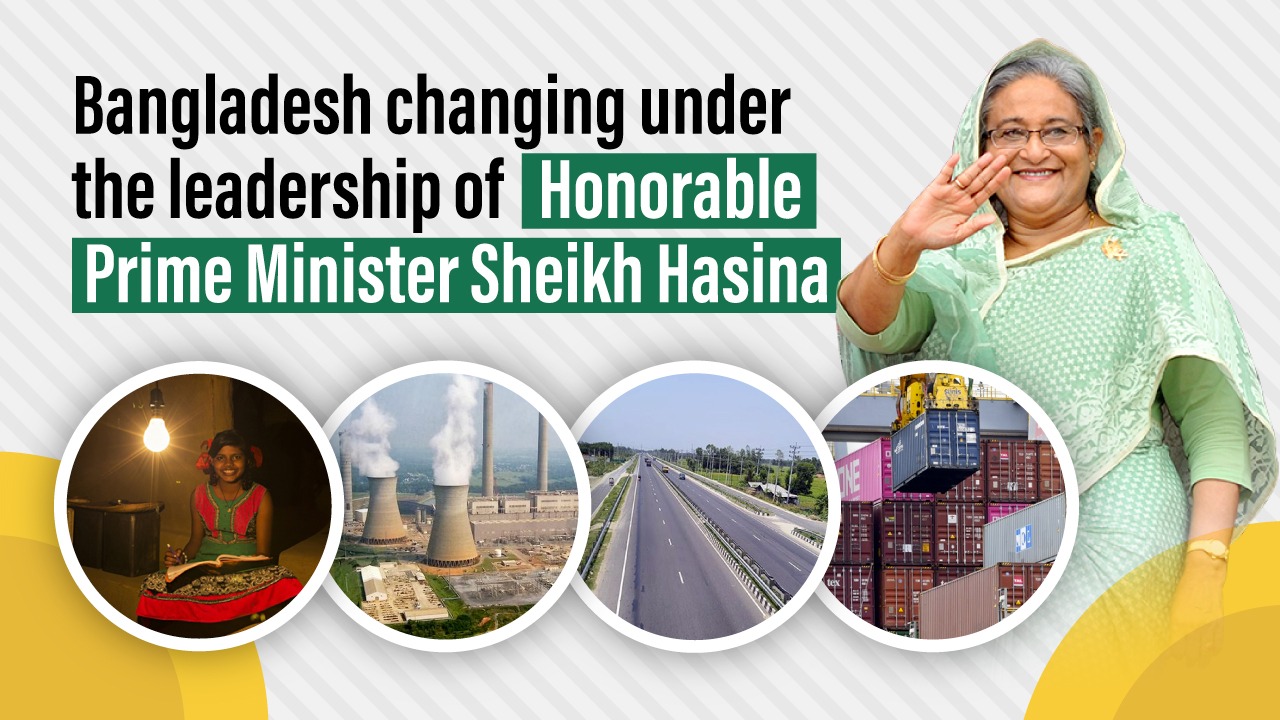
While the Yunus government sank into failure and darkness, Sheikh Hasina’s leadership earned global admiration.
At a time when the entire world was struggling under the COVID-19 pandemic, Bangladesh managed the crisis effectively due to Sheikh Hasina’s far-sighted leadership. While countries across the globe scrambled desperately for vaccines, she secured doses in advance and launched a mass vaccination campaign nationwide.
For this success, Prime Minister Sheikh Hasina received the “SDG Progress Award” at the 9th Annual Sustainable Development Conference of the United Nations on September 21, 2021. During the event, Professor Jeffrey Sachs honored her with the title “Jewel in the Crown of the Day.”
Not only that, but in 2024, the Global Alliance for Vaccination and Immunization (GAVI) awarded her the “Vaccine Hero” award.
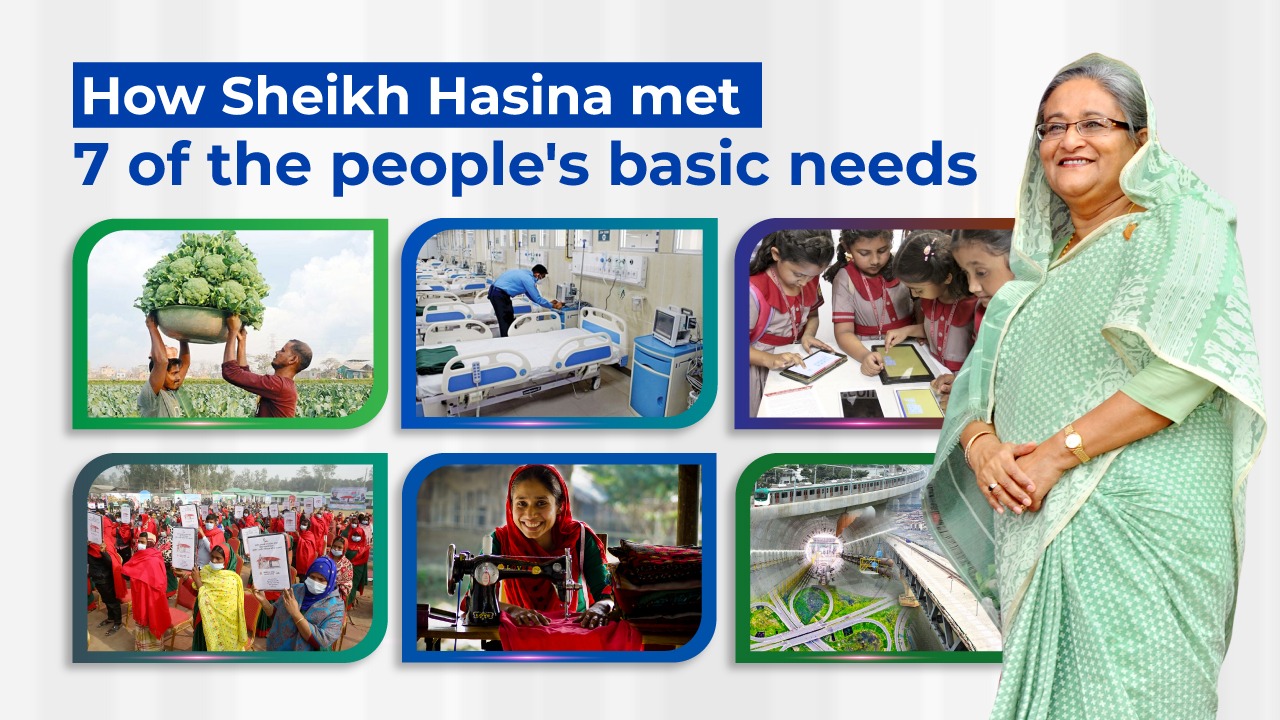
Her contributions were not limited to vaccination alone. She established community clinics to ensure healthcare access for ordinary citizens, enabling even remote and marginalized populations to receive free medical treatment. She ensured that every child received essential vaccines—including BCG, measles-rubella, and polio—without shortages.
In addition, she improved healthcare standards by establishing medical colleges and universities across the country. She increased hospital bed capacity and upgraded public healthcare services to international standards. Furthermore, by providing free medicines through government programs, she ensured healthcare access for poor and working-class people.
Many of those sitting in parliament today are successors of the defeated Razakar forces. Those who sided with Pakistan and participated in the killing of Bengalis during the Liberation War now see their descendants growing increasingly arrogant. Their primary goal is to protect Pakistan’s interests—not the safety and welfare of the people of Bangladesh.
That is why the deaths of children due to vaccine shortages do not concern them. Their concern revolves only around the 1972 Constitution and the Mujib Bahini. The reason is simple: the 1972 Constitution clearly defines who were Razakars and who were freedom fighters. That constitution exposes the disgraceful history of their forefathers, which is why they seek to abolish it.
On the other hand, the Mujib Bahini was a guerrilla force inspired by Bangabandhu’s ideals, which launched attacks against Razakars and their Pakistani backers during the Liberation War. The humiliation of that defeat still haunts them today. That is why they panic whenever the Mujib Bahini is mentioned and seek to erase that history.
For this reason, the Razakar-aligned forces in parliament remain indifferent to the blood of children—because the lives of Bengali children hold no value to them. They cry over the Constitution and the Mujib Bahini, but remain silent about the horrific deaths of children. This proves that those claiming to govern the country are in fact serving Pakistan’s interests.
Today, the people of Bangladesh can clearly see the contrast: on one side stands the “child-killer Yunus,” accused of negligence and conspiracy, and on the other stands “Crisis Manager Sheikh Hasina,” recognized as a global leader.
Ignoring UNICEF’s warnings, Yunus deliberately pushed children toward death and sacrificed the country’s independence and sovereignty through an agreement with the United States. Meanwhile, the Razakar-aligned forces in parliament have acted as silent partners in this conspiracy in service of Pakistan’s interests.
In contrast, Sheikh Hasina has demonstrated how visionary and honest leadership can rescue a nation from crisis. Her success during the COVID-19 pandemic and her transformation of the healthcare sector remain the foundation of Bangladesh today.
History never forgives criminals. The people of Bangladesh will one day bring justice for Yunus’s planned destruction and anti-national conspiracies. Once again, under the leadership of Sheikh Hasina, Bangladesh will become the Sonar Bangla envisioned by Bangabandhu.
Joy Bangla, Joy Bangabandhu
Author:
Rabbi Hasan
Student, Department of History, University of Barishal
Organizer, Bangladesh Chhatra League, University of Barishal Unit




This work is copyrighted and authorized by the Bangladesh Awami League. You may download, display, print and re-produce this material in unaltered form only (retaining this notice)for your personal, non-commercial use or use within your organization.
