12307
Published on July 2, 2026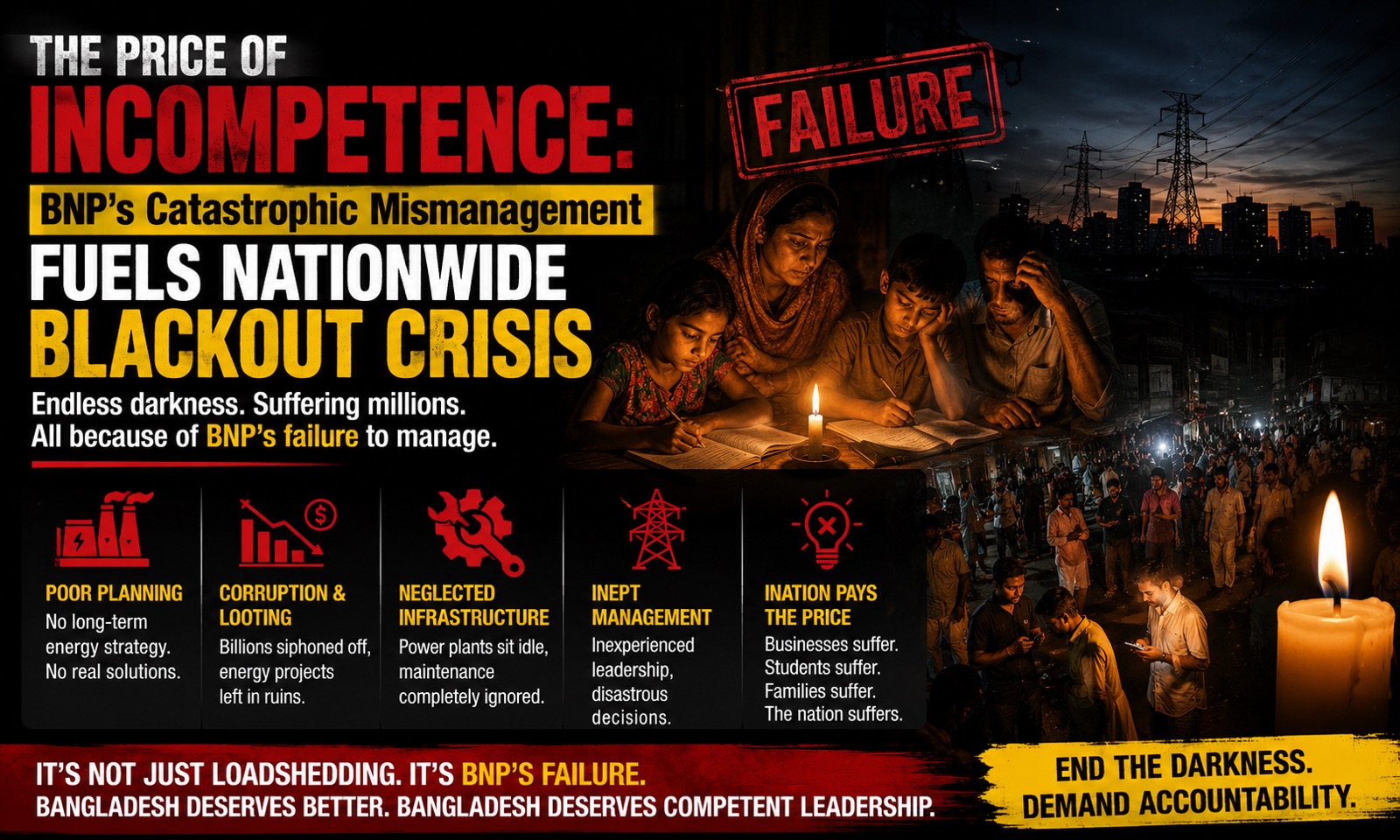
Bangladesh has an installed power generation capacity of more than 28,000 megawatts (MW). Yet, under the current BNP government, the country is only managing to produce between 13,000 and 14,000 MW on many days, even as demand during peak summer hours climbs above 16,500 to 17,000 MW. This leaves a daily shortfall of 2,000 to 3,000 MW or more.

Forced shutdown of two power plants causes 3000MW loadshedding
How Bangladesh’s power cuts draw a map of inequality
The impact is felt most painfully in rural areas, where the majority of Bangladeshis live. Many villages are going without electricity for 8 to 14 hours a day, and sometimes even longer. The outages continue even on public holidays and late into the night. According to data from the Power Grid Company of Bangladesh (PGCB), average load shedding on weekends has exceeded 2,000 MW in recent weeks. In districts like Sherpur, Sylhet, and Bagerhat, some areas are receiving only 40–50% of the power they need.
Power shortages at midnight, more load-shedding in rural areas
The situation feels especially frustrating when you consider the Rooppur Nuclear Power Plant. This major national project has made significant progress, with fuel loading completed and operations expected to ramp up in 2026. Yet for ordinary citizens, it has brought little to no relief. Chronic fuel shortages, unpaid bills to power producers that have ballooned to around Tk 450 billion, and poor planning have left dozens of plants running below capacity or sitting idle. Gas supplies fall far short of what’s required, and difficulties with imports only make matters worse.
This isn’t simply bad luck. It points to serious shortcomings in management and foresight at the highest levels.
The human suffering is real and deeply troubling. In rural homes across the country, families face long, hot nights without fans or lights. Children struggle to sleep in the stifling heat, the elderly grow weaker, and students preparing for important exams find it hard to concentrate or study effectively. Hospitals sometimes operate with unreliable power, raising serious concerns for patient safety. Small shop owners close early, losing income, while farmers cannot run irrigation pumps, putting crops and food supplies at risk.
Power cuts worsen amid searing heat
This is the difficult daily reality many Bangladeshis are living through under the current government. It feels like a betrayal of the basic promise that leaders should provide essential services like reliable electricity. While urban areas often get better treatment, even city residents face frustrating disruptions. The way power is distributed highlights a troubling imbalance: certain areas and groups are protected, while ordinary people, especially in rural communities, carry the heaviest burden.
Load-shedding triggers protests across districts
This isn’t just about inconvenience. It’s about lost opportunities, broken routines, and families left to cope in the dark. How many students are falling behind? How many small businesses are barely hanging on? The current leadership’s inability to fix this crisis is adding unnecessary hardship to millions of lives.
The economic consequences of this prolonged blackout are structural, severe, and potentially irreversible. Bangladesh’s economic engine relies on industrial manufacturing and modern digital services. Right now, both are being starved of power by an administration that appears completely indifferent to macroeconomic stability.
|
Economic Sector |
Core Operational Disruptions |
Long-Term Economic Threat |
|
Ready-Made Garments (RMG) |
Shattered assembly schedules; stalled manufacturing lines; massive reliance on raw fuel overheads. |
Missed global delivery windows; loss of buyer trust to Southeast Asian competitors. |
|
SMEs & Retailers |
Forced to run highly expensive diesel generators, entirely eating up small profits. |
Widespread commercial closures and rapid localized job cuts. |
|
Agriculture & Farming |
Irregular power grid currents rendering critical automated irrigation pumps unusable. |
Disrupted crop watering windows; reduction in domestic food production yields. |
|
Digital Economy & IT |
Constant drops in baseline internet connectivity; loss of billable freelancing hours. |
Permanent exit of foreign tech clientele; collapse of remittance inflows. |
The country's ready-made garment (RMG) sector and heavy textile factories, the lifeblood of its multi-billion- dollar export economy, are seeing their production schedules shattered. Missing international delivery windows severely damage Bangladesh’s hard-earned reputation as a reliable global supply chain partner.
Acute load-shedding taking toll on garment sector: BKMEA
When large-scale factories lose power, assembly lines stop, manufacturing costs spike, and international buyers begin looking toward more stable competitors in Southeast Asia.
The agricultural sector, the bedrock of domestic stability, faces an equally grave threat. Mechanical irrigation systems depend heavily on a stable electrical current. Unreliable power disrupts seasonal crop watering, putting agricultural yields at risk, threatening domestic food security, and driving up food inflation for a population already under financial stress.
Furthermore, Bangladesh’s fast-growing digital industries, including information technology sectors, freelancing networks, call centers, and tech startups, are experiencing a massive loss of productive hours. For a sector that relies entirely on 24/7 global connectivity, a fluctuating power grid is fatal. It actively drives away foreign clients, decimates foreign remittance earnings, and discourages crucial international venture capital investment.
No one wants to see Bangladesh held back. The government must act decisively: prioritize clearing dues to keep plants running, improve fuel management, ensure more equitable distribution, and accelerate reliable new capacity. Short-term fixes like greater reliance on costly backups are not sustainable. A long-term strategy focused on diversification, efficiency, and accountability is essential.
The people of Bangladesh deserve better, reliable power that supports their ambitions rather than hindering them. Families should not have to choose between safety and darkness. Businesses should not fear another day of lost opportunities. As this crisis continues, the hope is that leaders will listen to the growing frustration and respond with the competence and urgency the situation demands.
The lights need to come back on, not just for a few, but for everyone. Bangladesh’s future depends on it.







This work is copyrighted and authorized by the Bangladesh Awami League. You may download, display, print and re-produce this material in unaltered form only (retaining this notice)for your personal, non-commercial use or use within your organization.
