20203
Published on August 11, 2026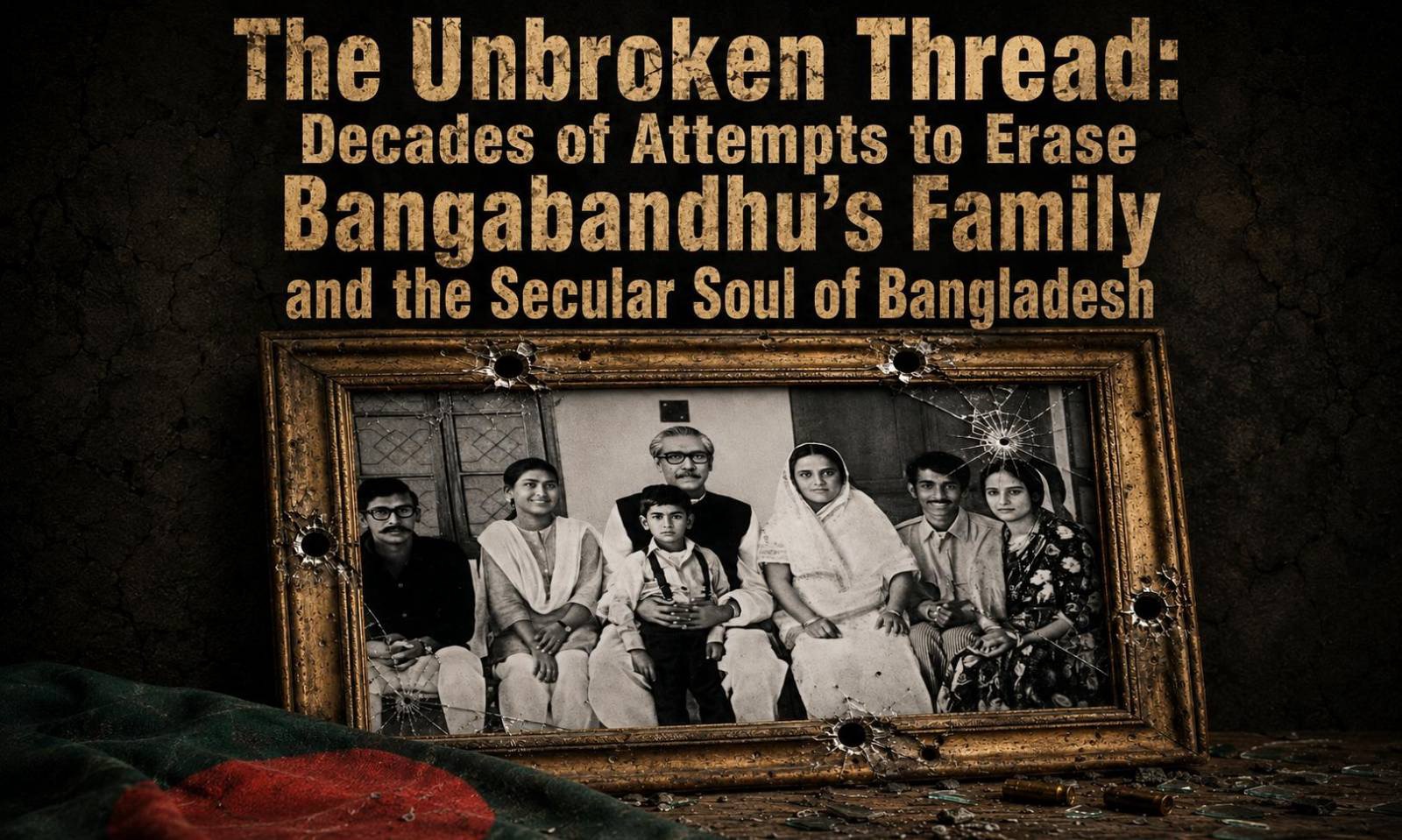
15 August 1975, 21 August 2004, and 5 August 2024 are not isolated tragedies. They mark a half-century assault by the same anti-liberation forces to dismantle a pluralistic nation.
Three dates stand out in Bangladesh’s post-independence history like open wounds: 15 August 1975, 21 August 2004, and 5 August 2024. They are not coincidences. They mark successive assaults by the same ideological forces that opposed the very creation of Bangladesh in 1971, those who fought to keep the country chained to Pakistan, including Razakars, Al-Badr, Jamaat-e-Islami and their modern extremist offshoots. Their objective has never merely been the removal of a government; it has been the total erasure of Bangabandhu Sheikh Mujibur Rahman’s political lineage and the systemic destruction of Bangladesh’s secular, pluralistic foundation.
A tragedy that shaped the course of our history
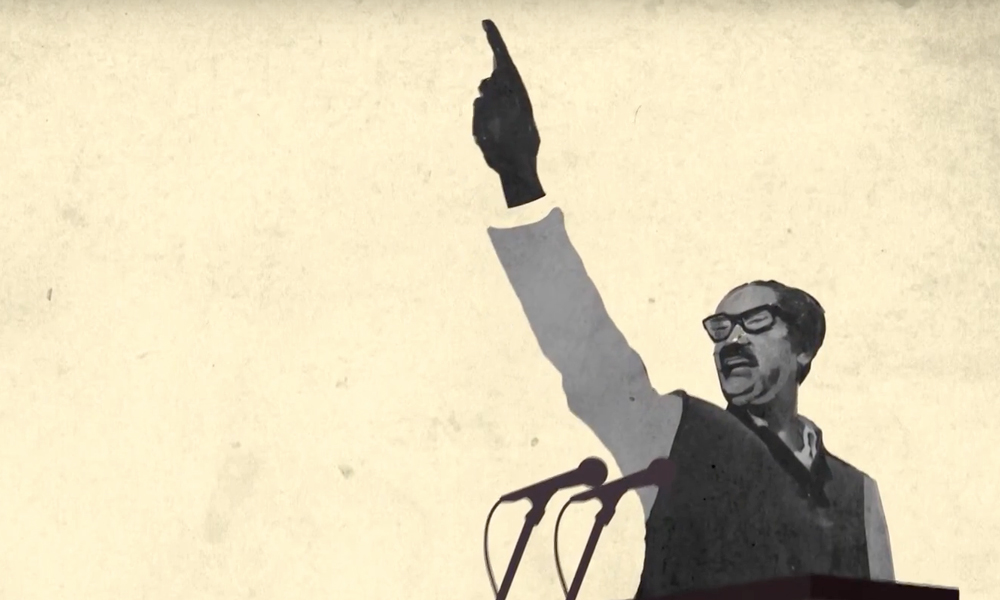
In the early hours of 15 August 1975, a group of army officers stormed Bangabandhu’s residence in Dhanmondi. They killed him, his wife Begum Fazilatunnesa, three sons including 10-year-old Russell, and most of the family present. Only his two daughters, Sheikh Hasina and Sheikh Rehana, survived because they were abroad. Power was seized. Khondaker Mostaq Ahmad, a cabinet minister with long-suspected pro-Pakistan leanings, took the presidency. The assassins were shielded. An Indemnity Ordinance granted them legal immunity.
BANGLADESH COUP: A DAY OF KILLINGS
Two months later, on 3 November 1975, the same forces finished the job inside Dhaka Central Jail. Four national leaders of the Liberation War, Tajuddin Ahmad, Syed Nazrul Islam, Captain M Mansur Ali and A.H.M. Qamaruzzaman, were gunned down in their cells. The systematic elimination of the 1971 leadership was almost complete.
The tragedy of 3 November 1975
Rather than justice, the post-coup regime systematically legitimized the killers and opened the gates for anti-liberation collaborators to re-enter the political mainstream. Under military rule, the perpetrators of 1971 atrocities were granted diplomatic postings and political patronage, effectively reversing the outcomes of the Liberation War. By rewarding the assassins and rehabilitating those who fought to keep Bangladesh tied to Pakistan, the post-1975 military establishment signaled that the foundational ideals of 1971 were open for liquidation.
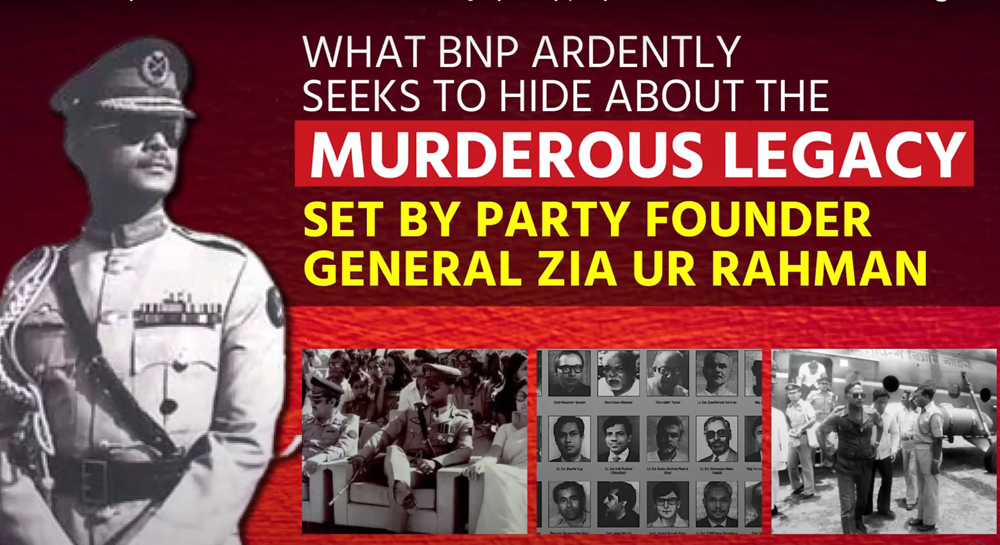
Through indemnity for Bangabandhu’s killers, Zia initiated culture of impunity
The seeds planted after 1975 bore poisonous fruit between 2001 and 2006 under the BNP–Jamaat coalition government. For the first time, Jamaat-e-Islami, whose leaders had collaborated with the Pakistan Army in 1971 and whose student wing formed the backbone of Al-Badr death squads, was rewarded with cabinet positions. The consequences were immediate and brutal.
In the weeks after the 2001 election, Hindu communities across the country faced a wave of violence: killings, rape, forced conversions, temple desecration and land grabbing. A subsequent judicial commission documented thousands of cases and named dozens of BNP and Jamaat figures. Militant networks flourished. Harkat-ul-Jihad-al-Islami (HuJI) and other groups operated with growing boldness. Bangladesh was described by international observers as a “cocoon of terror.”
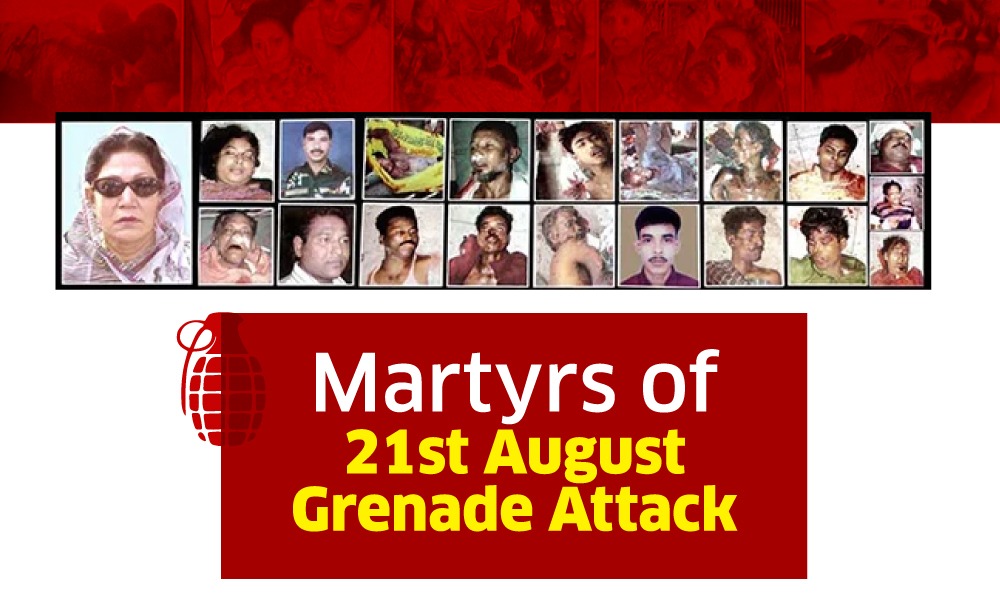
The climax of this era arrived on 21 August 2004. A military-grade anti-tank grenade attack targeted Bangabandhu’s daughter, Sheikh Hasina, during a peaceful anti-terrorism rally on Bangabandhu Avenue. 13 grenades were hurled at the stage as Sheikh Hasina finished speaking. Even though Sheikh Hasina survived by inches, twenty-four people were killed, including women’s leader Ivy Rahman, and over 300 were maimed.
August 21 Grenade Attack: A Heinous Chapter of Politics of Murder
All You Need to Know About the 21st August Grenade Attack Case
Subsequent judicial rulings confirmed the direct collusion between state apparatuses, intelligence officials, and HuJI militants. Courts also held Tarique Rahman, the influential BNP heir and de facto power centre during that period, responsible and sentenced him in absentia. It was an unambiguous attempt to annihilate Bangabandhu’s surviving political lineage and ensure no secular resistance could ever rise again.

The student-led quota protests of 2024 escalated into a broader movement. On 5 August, Sheikh Hasina was forced to resign and leave the country. An interim government took charge. What followed exposed the enduring agenda of the same forces, an agenda that has never abandoned its original objective from 1975: to eliminate Bangabandhu’s bloodline completely.
The two sisters who survived the massacre of 15 August 1975, Sheikh Hasina and Sheikh Rehana, remained the last living symbols of that unfinished project. Driving Hasina into exile and creating conditions of extreme vulnerability for the remaining family was not incidental. It was the logical continuation of a half-century campaign to finish what the assassins started.
In the chaos that ensued, minority communities, especially Hindus, faced systematic targeting. The Bangladesh Hindu Buddhist Christian Unity Council and other rights groups documented thousands of incidents: homes and businesses looted and burned, temples vandalised, families driven out. Police later acknowledged over 1,700 reported attacks and acts of vandalism in the immediate aftermath, many of them politically charged. Sufi shrines and dargahs across the country were attacked, vandalised or set on fire, acts rooted in the same ideological hatred that brands Sufism as heresy. Ahmadiyya Muslims and other vulnerable groups also reported assaults. Mob justice filled the vacuum left by weakened law enforcement.
Violence in Bangladesh After Hasina’s Ouster Stirs Fear Among Hindu Minority
These were not isolated excesses of political transition. They fit a decades-long pattern: remove Bangabandhu’s political heirs, intimidate the communities that supported the secular, pluralist vision of 1971, and create space for a narrower, exclusionary order.
The three dates are connected by more than calendar coincidence. They represent the same unfinished war against the idea of Bangladesh that Bangabandhu embodied. Those who collaborated with the Pakistan Army in 1971 never accepted the verdict of history. After the physical elimination of the founding leadership in 1975, they worked through constitutional engineering, political alliances, militant networks and street violence. When the family returned to power and pursued accountability for 1971 war crimes, the hostility only sharpened. The grenade attack of 2004 and the violence after 2024 are continuations of that campaign by other means.
August 21st grenade attack continuation of August 15 killing
Bangladesh was born rejecting the two-nation theory and the communal politics that partitioned the subcontinent. Its founding document promised secularism, democracy and dignity for all. The forces that have repeatedly targeted Bangabandhu’s family have never hidden their alternative vision: a state in which Sufi traditions are suspect, minority rights are negotiable, and the Liberation War is reduced to a contested footnote.
The question for Bangladesh, and for those who care about plural societies in South Asia, is no longer whether this continuity exists. The evidence is written in blood across half a century. The question is whether the country will finally confront it, or allow the project of erasure to succeed by attrition.





This work is copyrighted and authorized by the Bangladesh Awami League. You may download, display, print and re-produce this material in unaltered form only (retaining this notice)for your personal, non-commercial use or use within your organization.
