173
Published on October 15, 2026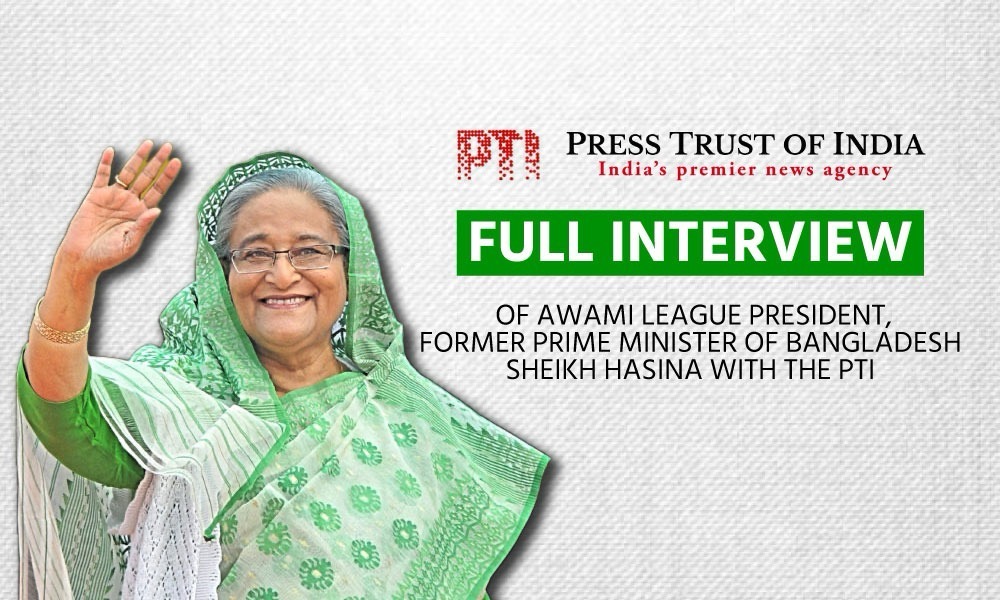
Question 1. Bangladesh has witnessed major political upheavals in the last nearly two years. Since your exit from Dhaka, politics in Bangladesh has taken many twists and turns and the Awami League has been facing severe restrictions. Do you plan to return to Bangladesh and how significant will it be for the overall political landscape in the country?
Sheikh Hasina: Bangladesh is passing through a grave national crisis. Democratic space has been closed. The judiciary has been used for political revenge. Media freedom has been restricted. Law and order have weakened. Minorities feel unsafe. Extremist forces have regained space. The economy has suffered. Factories have closed. Unemployment has risen. Investment has fallen. Prices are hurting ordinary families. Electricity and gas shortages have returned.
This is no longer only an Awami League issue. It is a national crisis. One of the country’s largest political forces has been banned. Its leaders are in jail or forced into hiding. Millions of its supporters have been denied normal political rights. A country cannot return to stability by excluding such a large section of its own people.
The suffering is being felt across the country, but Awami League leaders, workers and supporters have faced an unprecedented burden of political persecution. Thousands have been jailed, many more have been forced into hiding, and families have lost homes, jobs, businesses and livelihoods simply because of their political identity.
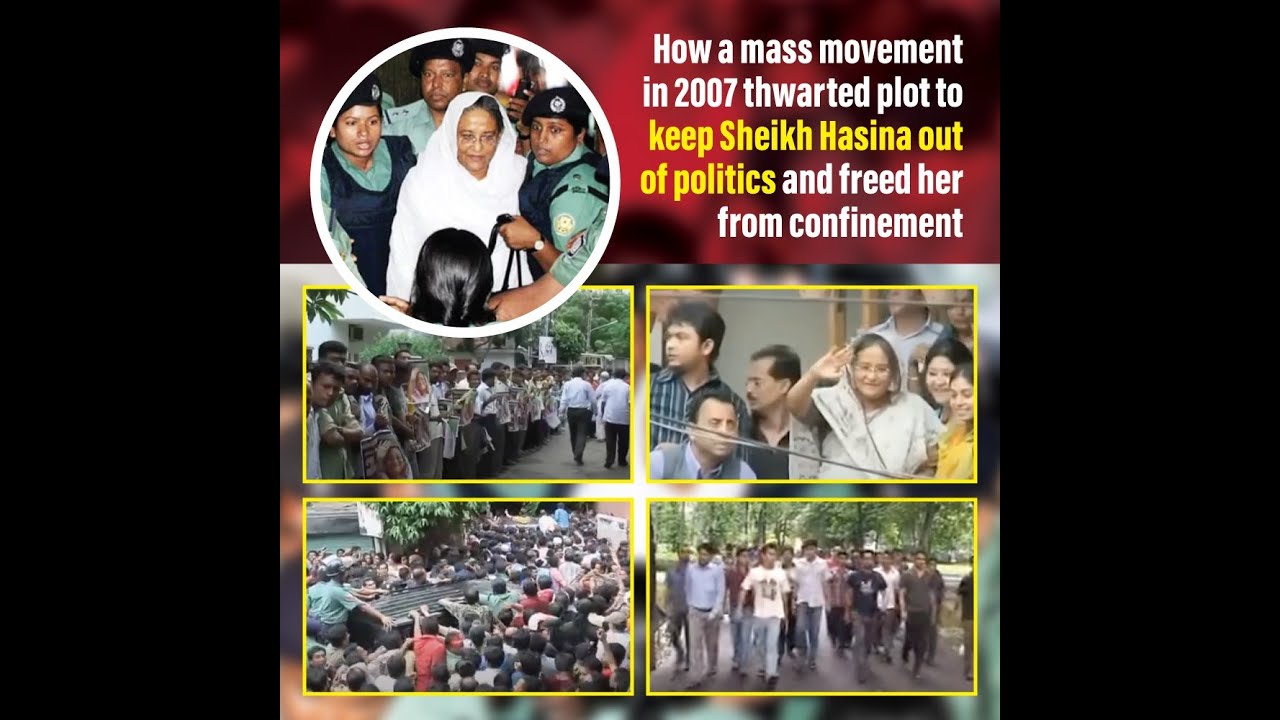
My return is part of the struggle to restore democracy, voting rights and the rule of law. I want to stand beside the people of Bangladesh, fight for their rights, and help restore democracy, security and development in my country.
The people of Bangladesh must be allowed to decide their own future through a free, fair and inclusive election. That is why my return will be significant. It will be a step towards returning Bangladesh to its people.
Question 2. You are slapped with death sentence by a Bangladeshi court. Are you not afraid of the possible hostilities that you may face in Bangladesh? Will Awami League leaders who left the country return along with you?
Sheikh Hasina: The risks are very clear. There may be arrest, imprisonment and even danger to life. But fear cannot decide my duty.
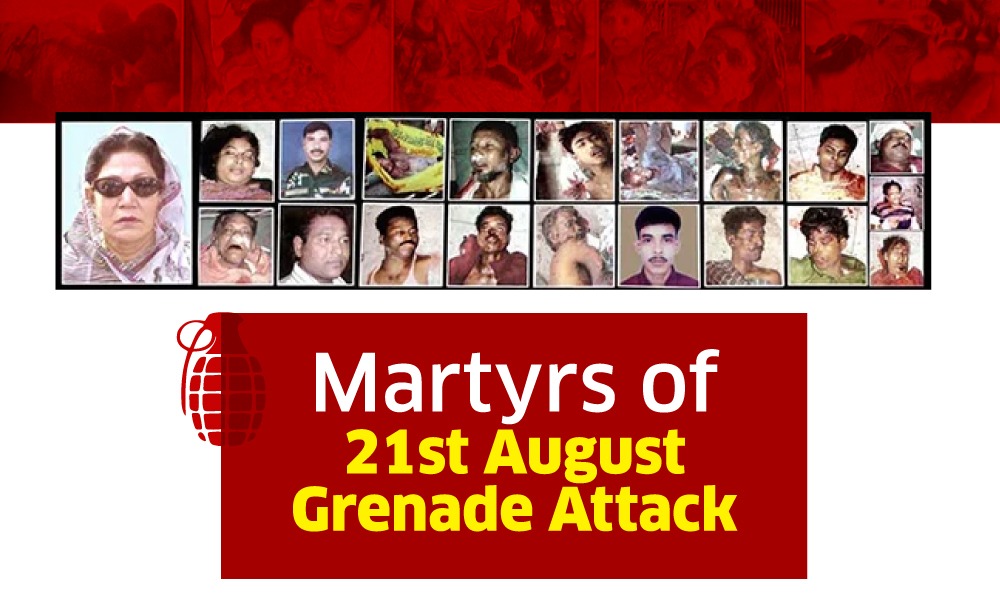
This is not the first-time death has come close. In 1975, my father, mother, brothers and almost my entire family were murdered. In 1981, despite military rule and intimidation, I returned to Bangladesh. There have been repeated assassination attempts, including the 21 August 2004 grenade attack, as well as imprisonment, conspiracy and political persecution.
The greater concern today is not personal safety. It is the destruction of justice in Bangladesh. A death sentence imposed through a politically motivated process, without a genuine opportunity to defend oneself, cannot be called justice.
As for Awami League leaders, many did not leave Bangladesh willingly. They were forced to leave to save their lives. Many others remain inside the country under constant pressure. But the principle is clear. The Awami League will not abandon Bangladesh, its people or its political movement. We will return to the people because our struggle is with them and for them.
Question 3. Do you think your return will galvanise the Awami League? What will be your future course of action and do you still aim to return to power?
Sheikh Hasina: The Awami League is already alive and active. It is not a party that exists only in an office or on paper. It has roots in every division, district, region, village and corner of Bangladesh. A ban, false cases and political intimidation cannot erase a party that led the Liberation War and built modern Bangladesh.
Our leaders and workers remain connected with the people even under severe repression. Thousands are in jail. Millions are hiding. Many have lost their homes, jobs and businesses. But their courage has not been broken. My return will encourage them, but the strength of the Awami League comes from its history, organisation, sacrifice and bond with the people.
The future course is clear. We must restore democracy. We must restore the rule of law. Political prisoners must be released. False cases must be withdrawn. Minorities must be protected. Extremism must be defeated. The economy must be revived. Bangladesh must return to the path of development.
In a democracy, power must come only through the people’s vote. If the people choose the Awami League in a free, fair and inclusive election, we will serve them. If they choose otherwise, their verdict must be accepted. The people, not force or fear, must decide who governs Bangladesh.
Question 4. The Bangladesh-India relations have witnessed major strain after your exit from Dhaka. Bangladesh now appears leaning more towards China as Prime Minister Tarique Rahman was in Beijing and not New Delhi. How do you see the current state of India-Bangladesh relations and Rahman’s foreign policy priorities?
Sheikh Hasina: Bangladesh’s foreign policy should be independent, balanced and guided by national interest. The principle given by the Father of the Nation, Bangabandhu Sheikh Mujibur Rahman, remains the best guide: friendship to all, malice to none.
India is Bangladesh’s closest neighbour and historic friend from the Liberation War. China is also an important development partner. Japan, the United States, Europe, ASEAN and the Muslim world are all important to Bangladesh. The problem is not engagement with China or any other country. The problem begins when one relationship is used against another. It begins when anti-India rhetoric is encouraged for domestic politics. It begins when major decisions are taken without transparency.
During my tenure, Bangladesh maintained balanced relations with all partners while protecting sovereignty and national interest. We deepened cooperation with India on security, connectivity, energy, trade and borders. We also worked with China, Japan, the United States and others.
Many long-standing issues were resolved through dialogue and mutual trust. The Ganges Water Sharing Treaty was signed. The Chittagong Hill Tracts Peace Accord made possible the return of around 64,000 refugees from India. The Land Boundary Agreement and the peaceful exchange of enclaves created an example for the world of how neighbours can settle difficult issues without conflict.
Regional connectivity was also expanded. Bus services connected Kolkata, Dhaka and Agartala, while the Maitree train strengthened rail connectivity. Chattogram and Mongla ports were opened for greater regional use, and Bangladesh developed connectivity arrangements that could benefit India, Nepal and Bhutan as well.
Energy cooperation also advanced. Diesel began to come from India through pipeline, and arrangements were developed for Bangladesh to import electricity from Nepal through the Indian grid, with India providing the necessary transit.
These initiatives served Bangladesh’s national interest and helped create opportunities for the entire region. Our balanced diplomatic position served Bangladesh well. Any departure from it creates unnecessary risks for Bangladesh and the region.
Question 5. Bangladesh and China have given a major push to develop the Teesta River Comprehensive Management and Restoration Project that has triggered some concerns in India. How do you see the development in the context of decades-old cooperation between New Delhi and Dhaka on sharing of waters of cross-border rivers?
Sheikh Hasina: Teesta is not just an infrastructure project. It is about water, agriculture, environment, livelihoods and trust between Bangladesh and India.
Bangladesh has the right to pursue development projects. But decisions involving transboundary rivers must be transparent. They must be technically sound. They must be environmentally responsible. They must also serve Bangladesh’s long-term national interest.
Rivers affect people, farmers, ecology and relations between neighbours. That is why regional sensitivities must be taken seriously. A river cannot be treated only as an engineering project. It is also a question of human life and neighbourly trust.
Water issues between Bangladesh and India have always required patience, dialogue and mutual respect. Bangladesh has consistently sought its rightful share of Teesta water. That position remains unchanged. The same spirit of dialogue and mutual respect should guide any long-term solution on Teesta.
Question 6. What kind of support are you seeking from friendly countries or international organizations so that an inclusive society can be built in Bangladesh?
Sheikh Hasina: The people of Bangladesh must determine their own future. Democracy, human rights, due process and political participation are universal principles. All responsible members of the international community should stand consistently for those principles.
An inclusive Bangladesh cannot be built by banning one of the country’s largest political parties. It cannot be built by jailing leaders, silencing the media and excluding millions of citizens from politics. Inclusiveness means political rights for all. It means protection for minorities. It means safety for women and children. It means independent courts, media freedom and a credible election where every party can participate.
The international community should listen to the suffering of the people of Bangladesh, and it should also recognise the extraordinary suffering being endured by Awami League leaders, workers and supporters. Families have lost loved ones. Workers have lost jobs. Minorities live in fear. Journalists face pressure. Awami League leaders and workers have been jailed, driven into hiding, deprived of livelihoods and punished for their political identity.
The support we seek is for democracy, rule of law, human rights and an inclusive political process. The people of Bangladesh must be able to freely decide their future.
Question 7. How do you see the current economic downturn in Bangladesh as your tenure as the prime minister witnessed significant upswing in overall growth of the economy?
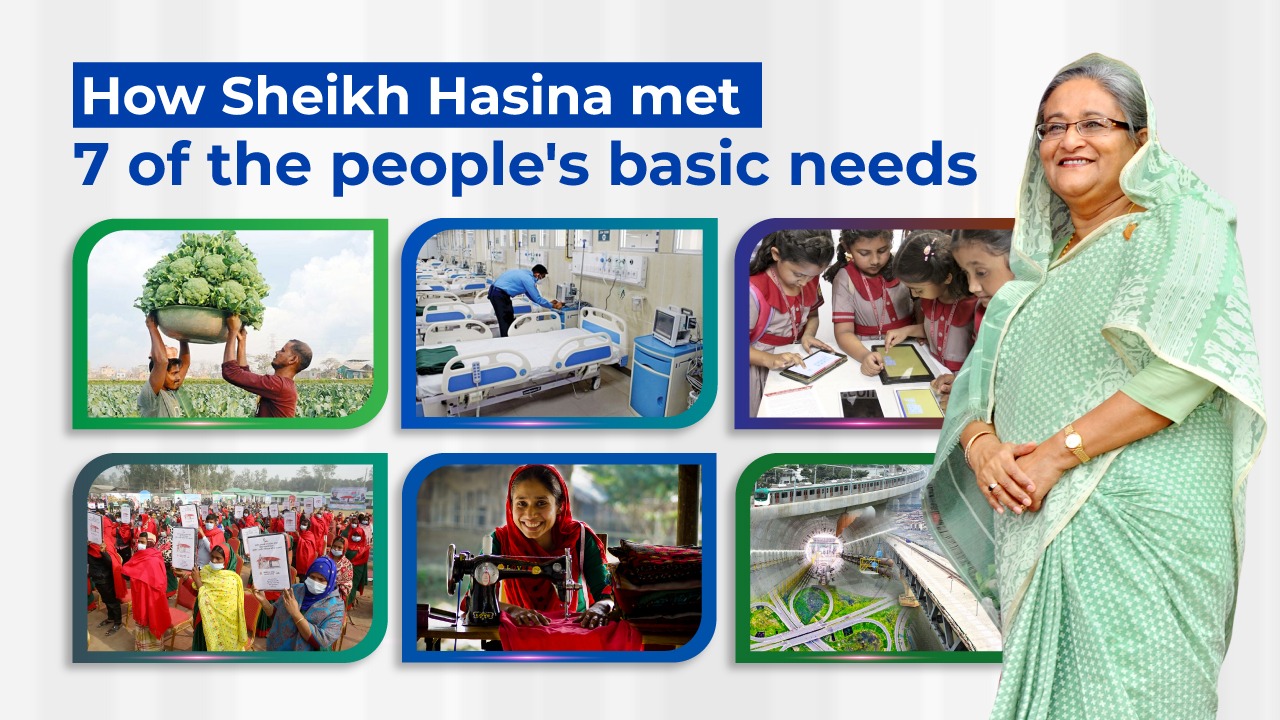
Sheikh Hasina: The current economic downturn is deeply painful because Bangladesh was on a strong and recognised development path during the Awami League government. We did not only speak about development. We delivered it.
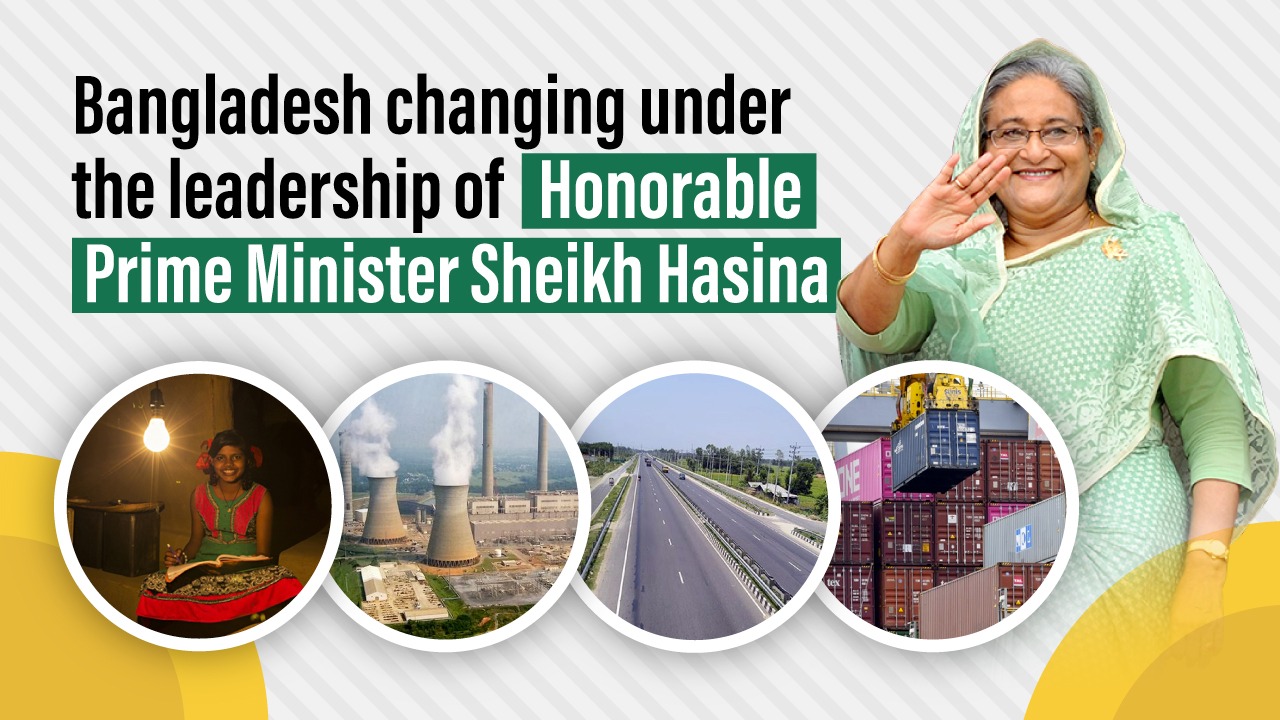
During our time, Bangladesh achieved recognition for graduation from least developed country status towards developing-country status. The economy grew from about 70 billion dollars to around 450 billion dollars. Per capita income rose from 482 dollars to 2,784 dollars. Poverty came down from 41 percent to 18.6 percent. Extreme poverty fell from 25.1 percent to 5.6 percent. Power generation capacity rose from 3,782 megawatts to more than 28,000 megawatts. Electricity reached every part of the country.
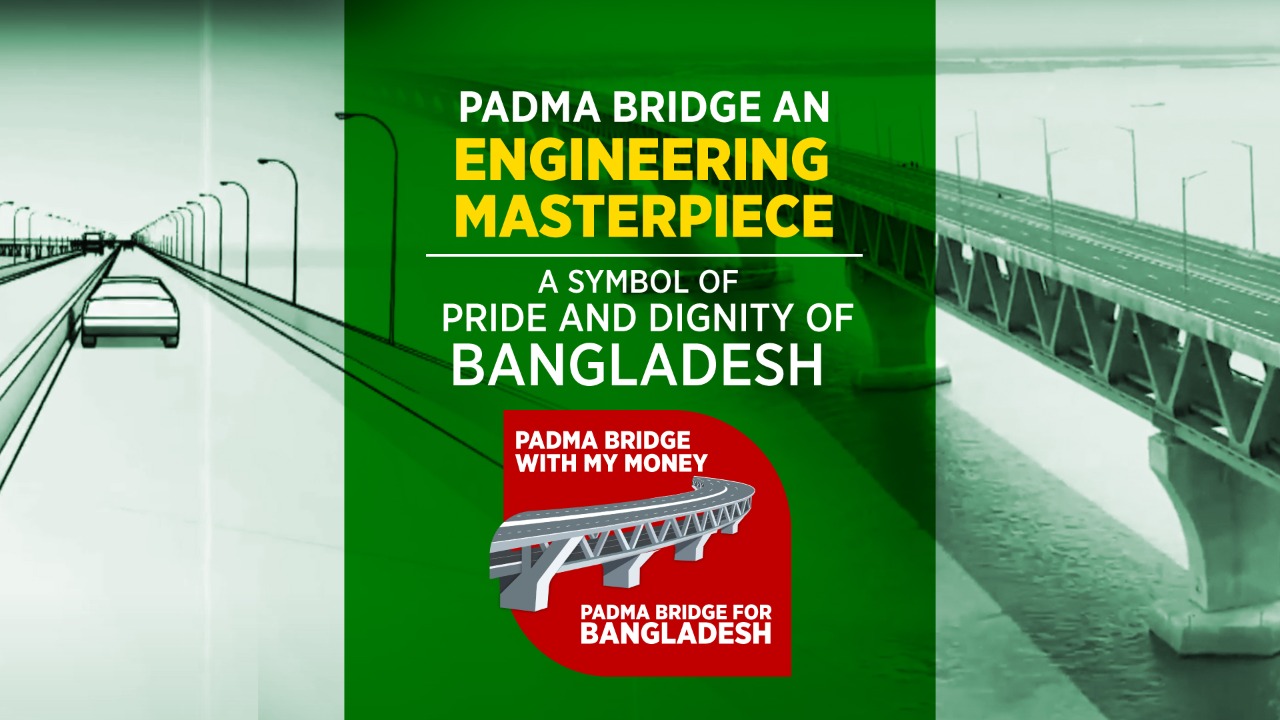
We built the Padma Bridge with our own resources, Metro Rail, Rooppur Nuclear Power Plant, Matarbari, Karnaphuli Tunnel, Bangabandhu Satellite, roads, bridges, ports, digital infrastructure, economic zones, community clinics and homes for landless families. We expanded education, women’s empowerment, social safety nets, agriculture support and digital services. Bangladesh became a country of confidence.
Now look at the condition of the country. The progress we built is being destroyed, and ordinary people are paying the price. GDP growth has fallen to 2.22 percent, compared with 6.80 percent during the Awami League period. Industrial production has fallen sharply, and for the first time in 54 years the industrial sector has faced negative growth. Defaulted loans in the banking sector have reportedly risen from 13 percent to 47 percent, the highest in the world. Poverty has increased from 18.6 percent to 46.8 percent.
Investment has turned negative. Job creation has collapsed. More than two crore people have newly fallen into unemployment, and over 500 industrial factories have closed. More than half of industrialists and business owners are either in prison or forced into hiding. The government is running by borrowing 700 to 900 crore taka from banks every day, while project costs have been increased by 50 percent to 250 percent.
This economic decline is directly linked to the political crisis. A Judicial Inquiry Commission had been formed on 18 July 2024 to investigate the violence. Yunus came to power and stopped it. Those involved in the July uprising were subsequently given legal protection, while sweeping cases were brought against Awami League leaders and workers. One of the largest political parties was banned.
For ordinary people, this has meant lost jobs, rising prices and growing insecurity. For Awami League leaders and workers, those hardships have been compounded by imprisonment, cases, attacks, loss of homes and businesses and the constant fear of arrest. The destruction of the rule of law has eroded investor confidence, weakened industry and deepened the suffering of both the general population and those targeted for their political identity. Without democracy, stability and equal protection under the law, the economy cannot recover.
Question 8. As the Prime Minister, you attended the BRICS Summit hosted in India in October 2016 and it generated goodwill. PM Tarique Rahman, however, used your online media briefing to not attend the recent BRICS summit in India. How does it reflect on bilateral relations and what impact do you see in view of Rahman's decision on both bilateral ties and for Bangladesh?
Sheikh Hasina: It was deeply unfortunate that Bangladesh chose not to participate. In my view, it was an immature decision and one that did not serve Bangladesh’s national interest.
BRICS is not simply a diplomatic gathering. It brings together major emerging economies and creates opportunities for cooperation in trade, investment, infrastructure, technology and development. By participating, Bangladesh could have gained valuable experience and opened new opportunities for its own economic and social development. That opportunity was lost.
Foreign policy cannot be conducted through personal reaction or short-term political calculation. India is our closest neighbour and an important historic partner, but BRICS engagement is also about Bangladesh’s own place in the international community.
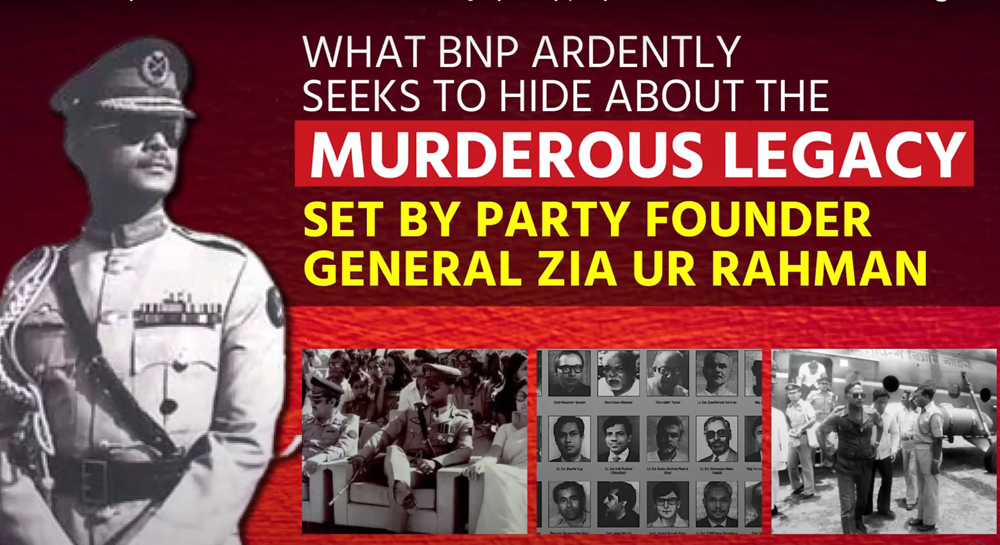
There is also a very simple question. After the assassination of the Father of the Nation, Bangabandhu Sheikh Mujibur Rahman, along with members of my family on 15 August 1975, and the killing of the four national leaders inside Dhaka Central Jail on 3 November, Ziaur Rahman came to power through an unconstitutional process. Yet when he visited Delhi in 1979, I was living in Delhi. When he travelled to London in 1980, I was also in London. My presence in either city did not prevent him from travelling there.
So why should my presence in Delhi prevent Ziaur Rahman’s son, Tarique Rahman, from coming to India today? What is the real reason behind such a decision? Relations between two countries cannot be determined by personal considerations or political sensitivities involving one individual.
During my tenure, we maintained strong relations with India while also expanding cooperation with China, Russia, Japan, the United States, Europe and many other partners. Friendship with one country never required hostility towards another. Bangladesh needs a mature, balanced and confident foreign policy. A responsible government should open doors for the country, not close them.
Question 9. As Prime Minister, you faced a lot of criticism in the last few years in power. But it is also a fact that Bangladesh witnessed some of the fastest economic growth under your leadership. How do you see the sudden downturn in economic growth and decline in several indices, as we have seen deaths of almost 1,000 children in measles?
Sheikh Hasina: I have faced criticism throughout my political life only from those who don’t believe in the progress of Bangladesh. I have also faced tragedy, persecution and repeated attempts to stop me from serving the people.
On 15 August 1975, my father, the Father of the Nation Bangabandhu Sheikh Mujibur Rahman, my mother, my three brothers, two sisters-in-law and other members of my family were brutally murdered. The killers were given indemnity and rewarded with diplomatic postings. The trial of war criminals was stopped. I was prevented from returning to my own country for six years.
After returning on 17 May 1981, obstacles continued at every stage. Yet the struggle continued, the people gave us their mandate, and Bangladesh was transformed socially and economically. Poverty was reduced, electricity expanded, agriculture strengthened, infrastructure built, and education and healthcare improved. Women’s empowerment became a major national priority. Child mortality and maternal mortality were brought down substantially. Girls' education expanded, women entered employment and public life in greater numbers, and social safety programmes were strengthened.
The community clinic programme brought primary healthcare directly to rural people. Thousands of community clinics provided maternal and child healthcare, vaccinations, family planning services and basic medicines close to people's homes. Bangladesh became an economy and a society of confidence. That is why the present decline is particularly painful. It was not inevitable. It is the result of poor governance, instability and neglect.
The measles crisis is perhaps the most heart-breaking example. The Awami League government built an established vaccination system. We had an arrangement with UNICEF, and funds had been allocated in the budget. Muhammad Yunus was repeatedly warned about vaccine shortages, but the vaccines were not procured in time. After Tarique Rahman came to power, the matter was still not addressed with the urgency it required. More than a thousand children have now died.
These were preventable deaths. When a government inherits the system, financing and institutional mechanism to protect children but fails to act, it cannot simply call that an administrative mistake. It is a failure of responsibility. Muhammad Yunus and Tarique Rahman cannot avoid accountability for this. A government is ultimately judged by whether it can protect the lives and livelihoods of its people.
Question 10. In hindsight, is there anything that you now feel could have been handled differently in handling the students' protests that forced you to leave the country?
Sheikh Hasina: The government tried from the beginning to resolve the quota issue peacefully. We spoke with the students and responded to their demands. In fact, following the earlier student movement in 2018, the quota system had already been abolished.
But in 2024, something different happened. Even as the original demands were being addressed, new demands continued to appear. The movement did not end. Instead, it moved towards confrontation, violence and finally the demand for the fall of the government. That is where the real question lies.
Muhammad Yunus later provided an important clue himself. At an event associated with the Clinton Foundation, he described what happened in Bangladesh as “meticulously designed” and spoke of a mastermind behind it. His own words deserve careful examination.
If this had only been a movement for quota reform, why did it continue after the issue was being resolved? Why did a student demand become a movement to overthrow an elected government? Who planned that transformation? Who introduced violence into it? Who financed and organised it? These questions remain unanswered.
That is precisely why a Judicial Inquiry Commission was formed on 18 July 2024. Every death, every act of arson, every attack and every incident of violence needed to be investigated. After Yunus assumed power, that commission was cancelled. Why was an independent judicial investigation stopped if the objective was to establish the truth?
What followed raises an even more serious question. The Yunus administration subsequently created an indemnity framework protecting participants in the July uprising from criminal liability for acts treated as political resistance. At the same time, Awami League leaders, workers and supporters were subjected to sweeping criminal cases, arrests and imprisonment.
How can there be one standard of justice for those on one side and another standard for the Awami League? When people accused of involvement in violence, arson or killing can receive legal protection while Awami League leaders and workers are pursued through mass cases, it inevitably raises the question of whom the authorities were protecting and why.
What happened under Yunus also cannot be separated from the political order that followed. Tarique Rahman's government has continued the exclusion and prosecution of the Awami League, while Jamaat under Shafiqur Rahman has been one of the principal political forces to benefit from the changed political environment. In my view, Yunus, Tarique Rahman and the Jamaat leadership under Shafiqur Rahman have each, in different ways, contributed to sustaining a politics of impunity, exclusion and persecution.
These are serious matters. They should not be settled through accusation and counter-accusation. Put the evidence before a genuinely independent investigation. Establish who ordered the killings, who committed the arson, who organised the violence, who financed it, who benefited from it, and why those responsible were later given protection. That is how the truth should be established.
Question 11. Do you think you could have done more to get the BNP to fight the parliamentary elections in 2024, as the boycott by BNP and other parties appeared to make the elections lose credibility and many political observers say that was the beginning of public outrage against your government?
Sheikh Hasina: Repeated efforts were made to bring the BNP into the electoral process. Khaleda Zia was personally invited to sit together over tea and discuss the election. It was also proposed that representatives of different political parties could join the government during the election period and share responsibility for overseeing the electoral process. They rejected those opportunities. It is therefore not correct to say that efforts were not made. The question is why the BNP repeatedly chose boycott and confrontation instead of contesting elections.
This pattern did not begin in 2024. From the time we formed the government in January 2009, there were repeated attempts to destabilise the administration. Within weeks, on 25 February, the BDR mutiny took place. In the years that followed, the country witnessed repeated campaigns of violence in the name of removing the government.
During the arson campaigns in 2012, thousands of vehicles were attacked or burned. Our records documented attacks involving 3,482 cars, buses and trucks, 12 trains and nine launches and other vehicles, while 543 were killed. Around 25,000 trees were also cut down during those campaigns. In 2013, the Hefazat-e-Islam mobilisation at Shapla Chattar was accompanied by vandalism and arson, while Khaleda Zia openly supported the movement and called for the government to be removed.
Then, ahead of the 2014 election, the BNP-Jamaat alliance announced that it would prevent the election from taking place. Around 500 schools were set on fire, polling centres were attacked, and election officials and ordinary citizens were killed. Violence was used not to contest the election, but to stop other citizens from voting.
Bangladesh was also confronting serious extremist threats during this period, culminating in the horrific Holey Artisan terrorist attack in 2016. Governing the country required protecting democratic institutions while simultaneously confronting political violence and terrorism.
Whenever the BNP chose to take part in elections, the opportunity was there. In 2018, all major political parties joined the election, including the BNP. The BNP did not boycott the process from the beginning; it announced a boycott only on election day. It also faced serious internal problems, including nominating multiple candidates in several constituencies, which created confusion within the party and weakened its own electoral campaign.
There is another historical fact that should not be forgotten. In the widely recognised 2008 election, the Awami League contested 259 seats and won 229. The BNP-Jamaat-led alliance won only 29 seats. That was a major political setback for the BNP, and in my view, it contributed to their growing hesitation about facing the electorate in subsequent elections.
So, the argument that the credibility problem in 2024 arose because the Awami League refused to engage the BNP is not correct. They were repeatedly invited to participate. They chose boycott. The deeper question is why they chose that path, and under whose advice or political calculation those decisions were made.
Democracy requires courage. Political parties must contest elections, present their programmes to the people and accept the voters’ verdict. Boycotting elections, resorting to violence and then challenging the legitimacy of the process from outside cannot be a substitute for democratic participation.

This work is copyrighted and authorized by the Bangladesh Awami League. You may download, display, print and re-produce this material in unaltered form only (retaining this notice)for your personal, non-commercial use or use within your organization.
