2964
Published on October 21, 2026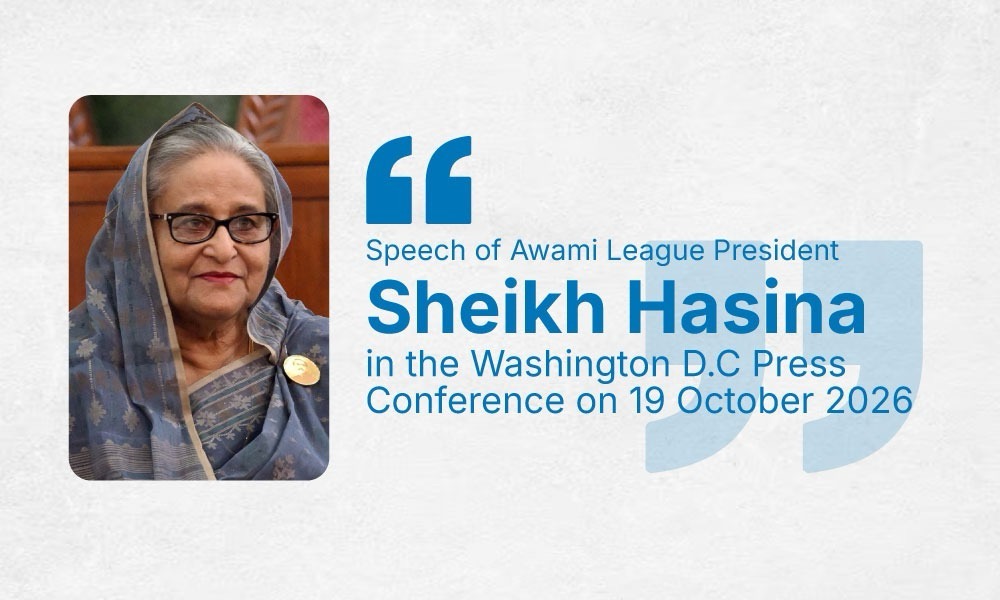
Distinguished members of the American and international press,
Honorable guests,
Friends of Bangladesh,
Ladies and gentlemen,
Assalamu Alaikum and good morning.
I am honored to speak to you today from Washington, D.C., the capital of a nation founded on the principles of democracy, freedom, human dignity, and the rule of law. I thank you for this opportunity to speak directly to the American people, the international community, and all who care deeply about democracy, human rights, regional security, and Bangladesh’s future.
I address you not only as a former Prime Minister of Bangladesh but as a lifelong servant of my country’s development, security, independence, and democratic future. I speak not from power, but from a lifetime of service—as a former Prime Minister, as the daughter of Bangladesh’s Father of the Nation, Bangabandhu Sheikh Mujibur Rahman, and as a citizen devoted to my country’s independence, development, and prosperity.
Bangladesh and the United States share a deep and growing partnership rooted in common values and mutual interests — democracy, economic growth, regional stability, counterterrorism, climate action, trade, and human security.
What happens in Bangladesh matters not only to its people but also to the United States and the global community.
Today, I will speak candidly about three critical issues:
- The events that unfolded in Bangladesh and what the international community must understand about them.
- The current state of democracy, human rights, the economy, and the rule of law in Bangladesh.
- The vision I hold for Bangladesh’s future.
I do not seek the United States to take sides in Bangladesh’s domestic politics.
I ask only that Bangladesh be judged by the same universal democratic principles upheld worldwide: free and fair elections, constitutional governance, due process, freedom of expression, political pluralism, and equal protection under the law.
Political disagreement is natural and necessary in a democracy. Governments must be held accountable. But democracy cannot survive when dissent becomes a pretext to exclude entire political parties or silence millions of citizens.
Supporters of the Awami League are Bangladeshi citizens and cannot be erased from the political landscape. Equally, those who oppose my government are citizens whose rights must be respected.
The future of Bangladesh must be built on reconciliation, not revenge.
Bangladesh needs a political environment where every citizen—regardless of political affiliation, religion, gender, social status, or region—can participate peacefully in shaping the nation’s future.
The international community has a vital role.
The United States wields significant influence in South Asia and with it comes responsibility—not to dictate who governs Bangladesh, but to champion democratic institutions, constitutional order, peaceful political competition, and respect for human rights.
Bangladesh’s strategic location at the crossroads of South and Southeast Asia, its role in the Bay of Bengal and the Indo-Pacific, its vibrant economy, and millions of livelihoods connected to the American market make its stability and prosperity a shared interest.
Our bilateral relationship should transcend personalities and be grounded in enduring national interests.
I envision stronger Bangladesh-U.S. economic ties, increased American investment, expanded cooperation in education and technology, enhanced security collaboration, and deeper people-to-people connections.
At the same time, Bangladesh must remain a sovereign nation capable of maintaining constructive relations with all partners—be it the United States, India, China, Japan, or Europe.
Bangladesh should never become a battleground for great-power rivalry but rather a bridge between regions.
I acknowledge the difficult questions surrounding my government, the events of 2024, and their aftermath. I welcome these questions and stand ready to answer them.
Justice must be transparent, credible, and impartial. Allegations against anyone—including myself—should be resolved through fair legal processes, not political declarations.
Justice demands fairness for victims of violence, families who suffered loss, those unlawfully detained, and the accused who deserve a fair defense.
There can be no lasting peace without justice, and no justice without due process.
I envision a Bangladesh where political opponents engage in dialogue rather than street conflict; where elections are decided by voters, not violence; where journalists report without fear; where youth can criticize freely; where economic opportunity is based on merit, not political ties; and where every citizen feels ownership of their country.
I am deeply grateful to the people of Bangladesh for their trust over the years.
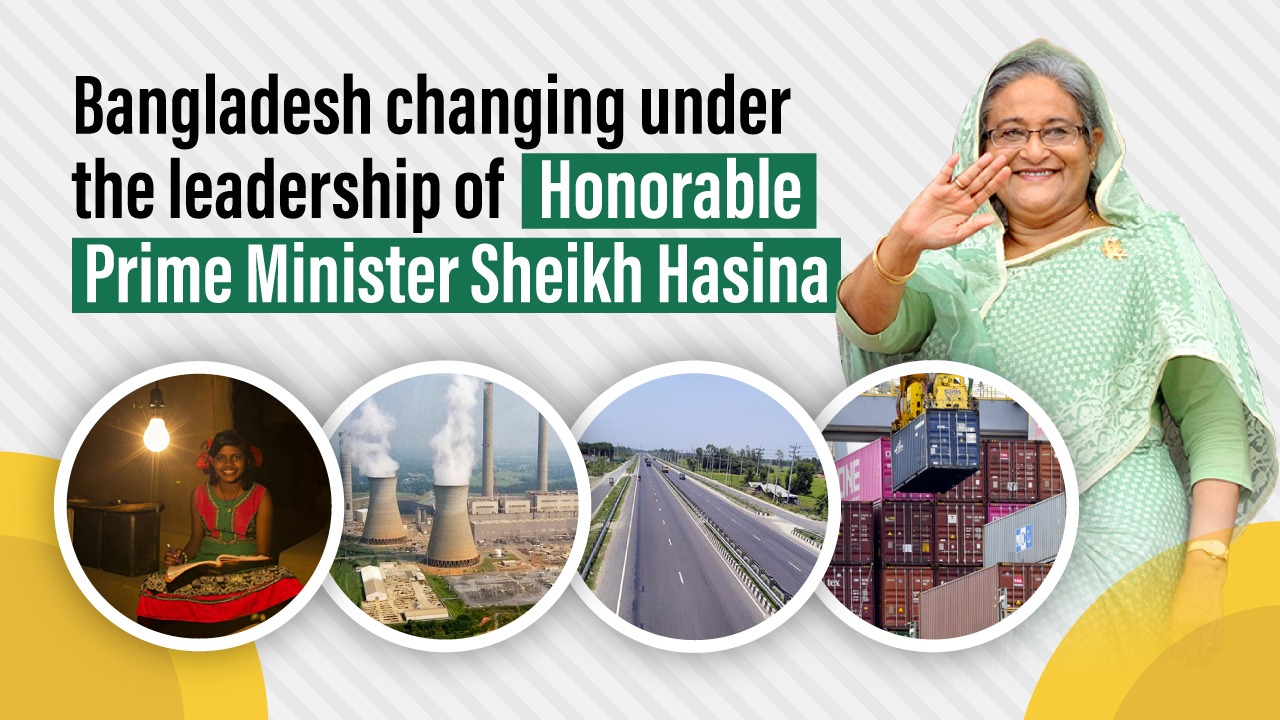
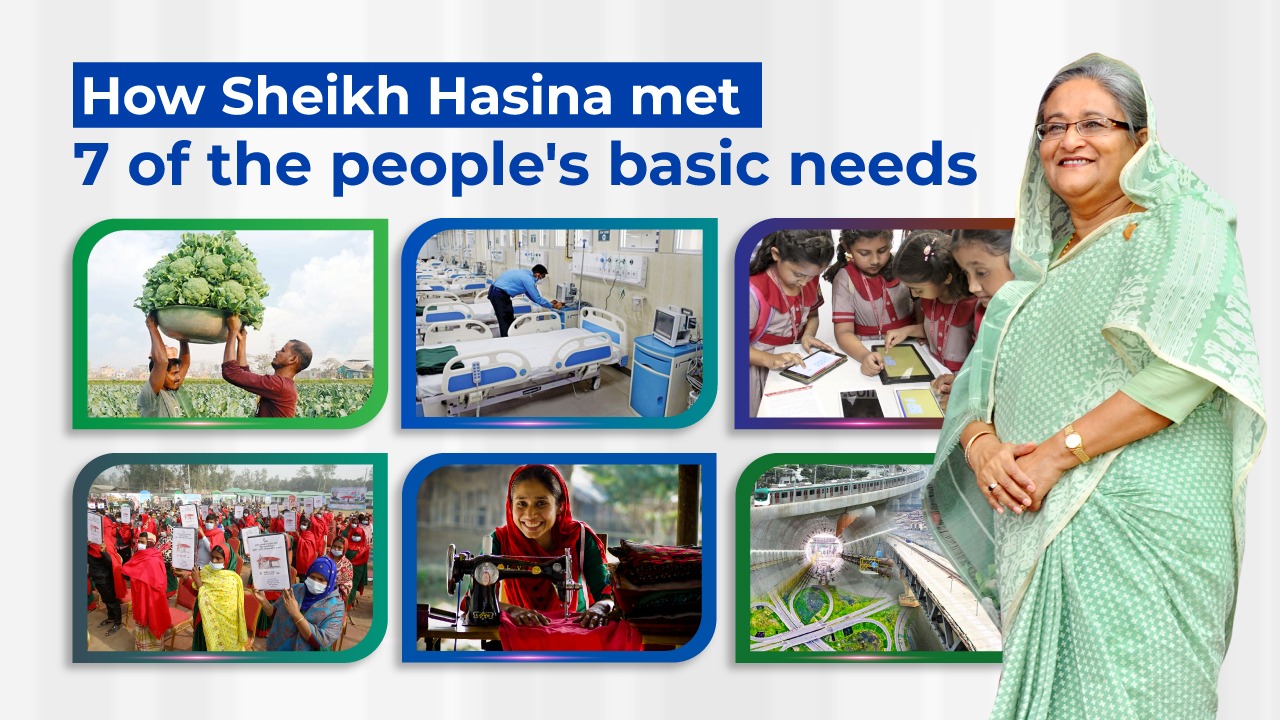
Whatever history’s judgment of my government, it will also recognize the remarkable transformation Bangladesh has achieved—in economic growth, infrastructure, electricity access, digital connectivity, poverty reduction, and global standing.
But development must never justify restricting democracy, nor should democracy become an excuse to undermine development.
Bangladesh needs both democracy and development; freedom and security; justice and reconciliation; strong institutions rather than strong individuals.
To the American people, I say: Bangladeshis have enriched the United States as entrepreneurs, professionals, academics, workers, and community leaders.
The Bangladesh-American community is a vital bridge between our nations, and I hope that bridge grows stronger.
The friendship between Bangladesh and America is greater than any government, party, or political disagreement—and it must endure.
My Message to Washington:
I do not ask the US to choose Sheikh Hasina or the Awami League. I ask the US to choose democracy. I do not ask for interference but for support of non-interference. I ask that Bangladeshis determine their government through free, inclusive political processes.
I ask the US to support:
- Free elections
- Independent courts
- Freedom of the press
- Freedom of political association
- Protection of minorities
- Due process
- Economic openness
- Peaceful political competition


This work is copyrighted and authorized by the Bangladesh Awami League. You may download, display, print and re-produce this material in unaltered form only (retaining this notice)for your personal, non-commercial use or use within your organization.
