4979
Published on November 1, 2026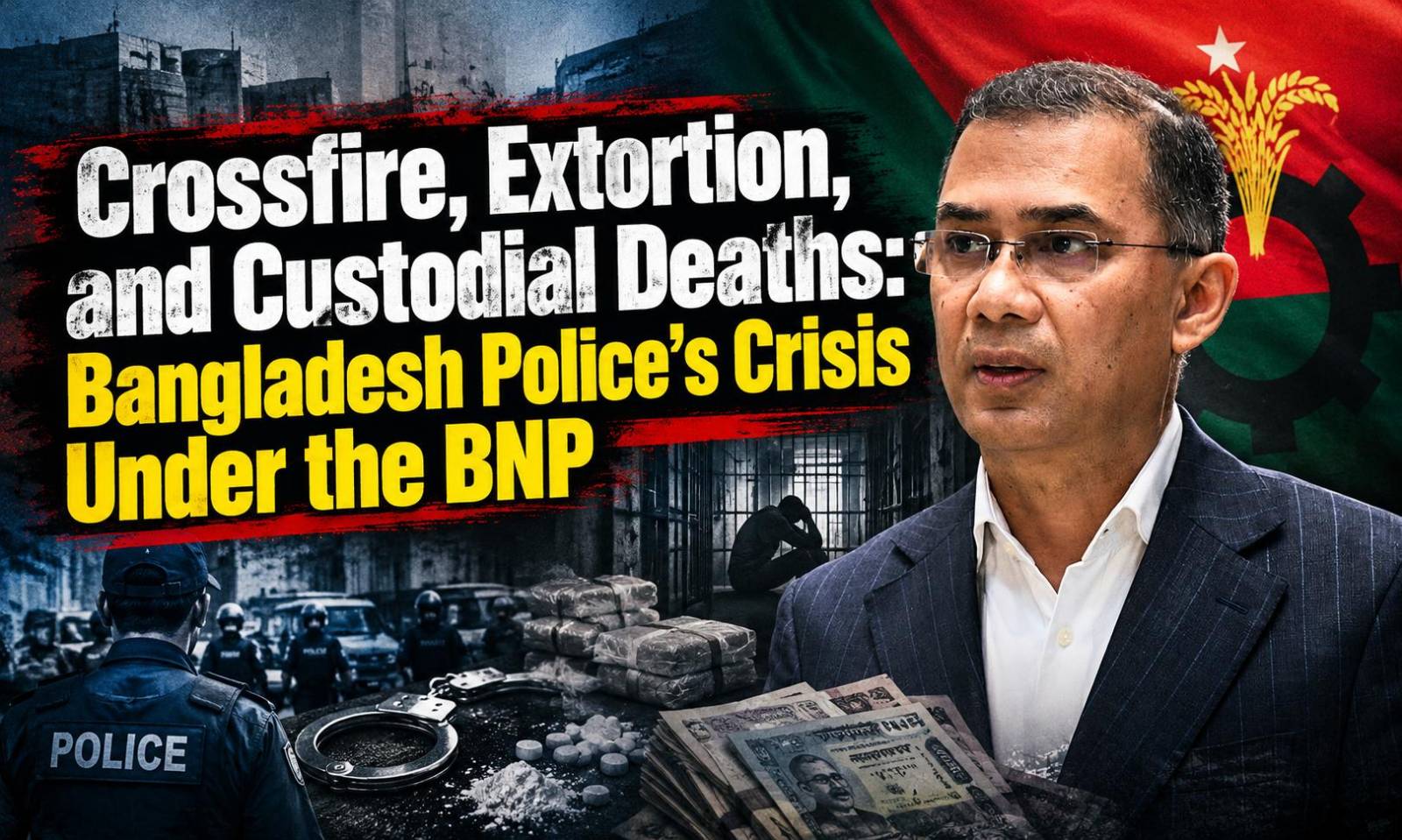
From alleged extortion and narcotics theft to a death in custody and the normalisation of “crossfire,” a mounting series of cases raises urgent questions about police accountability under Tarique Rahman’s government.
Bangladesh’s police force is facing a credibility crisis that the newly elected Bangladesh Nationalist Party (BNP) government can no longer treat as a series of unfortunate exceptions. Allegations of custodial abuse, extortion, suspected narcotics diversion, selective arrests, and the revival of extrajudicial language point to a single, uncomfortable question: when those entrusted with enforcing the law are repeatedly accused of breaking it, who protects ordinary citizens?
The issue is not that every officer is corrupt. It is whether the government will insist on independent investigation, visible accountability, and the principle that political authority never becomes a licence for abuse. Eight months into Tarique Rahman’s administration, the evidence suggests that test is being failed.
In late October 2026, Inspector General of Police (IGP) Md Ali Hossain Fakir told a public audience that police would carry out “crossfire” if the government allowed it. The remark was not ambiguous. Rights organisations immediately condemned it as a signal that extrajudicial killings remained an acceptable option inside the force’s leadership.
Police will use ‘crossfire’ if government allows it: IGP
Odhikar has documented five alleged extrajudicial killings since the BNP government took office in mid-February 2026. Ain o Salish Kendra’s long-term data shows 2,957 people killed in alleged “crossfire” or gunfights involving law enforcement between 2004 and September 2026, with police responsible for roughly 46 percent of those deaths. While the scale of such killings has declined from the worst years of the previous regime, the IGP’s willingness to discuss the practice openly reveals how little the institutional culture has changed.
Death by Law Enforcement Agencies Jan-Sep 2026
Government officials later described the comments as embarrassing and inconsistent with policy. The damage, however, was already done: the country’s top police officer had treated state-sanctioned killing as a negotiable tool rather than a crime.
Corruption in the force isn't limited to low-level bribe-taking; it reaches right into the upper ranks. A clear example came to light when the Detective Branch (DB) of the Dhaka Metropolitan Police raided a luxury triplex in Purbachal. The property belonged to Additional DIG Abdullah Al Zahir, a senior officer in the Police Headquarters Repair and Maintenance Department.
85 held in anti-drug raid on addl DIG’s Purbachal house
The raid resulted in the arrest of 85 people operating out of a high-end drug den running under the protection of a top police officer. Although DIG Zahir was quickly removed from his post following public outrage, the raid exposed how deeply involved high-ranking officers can be in organized crime.
Why did DB remove CCTV cameras before raiding Additional DIG's house?
When a senior police official provides shelter to narcotics operations, it isn't just an isolated mistake. It shows how criminal networks can operate inside the state itself, using the power of the uniform to shield illegal operations while using the threat of arrest to extract money from ordinary people.
This is not limited to hosting. In Chattogram’s Satkania, three police personnel, an SI and two constables, were withdrawn after allegations that they stopped a truck carrying 30,000 yaba tablets, handcuffed the driver, moved the drugs, and wiped the CCTV memory card.
Three police personnel withdrawn over allegations of stealing 30,000 yaba tablets
The pattern is familiar: police not as interdictors of the drug trade, but as participants and protectors. When officers themselves divert consignments for profit, the anti-drug rhetoric of the government becomes theater.
The force has shown striking energy elsewhere. Since February 2026, roughly 30 people have been arrested, about one a week, for criticizing or mocking the Prime Minister, his family, or ministers. Social-media posts routinely trigger Anti-Terrorism Act cases and remand.
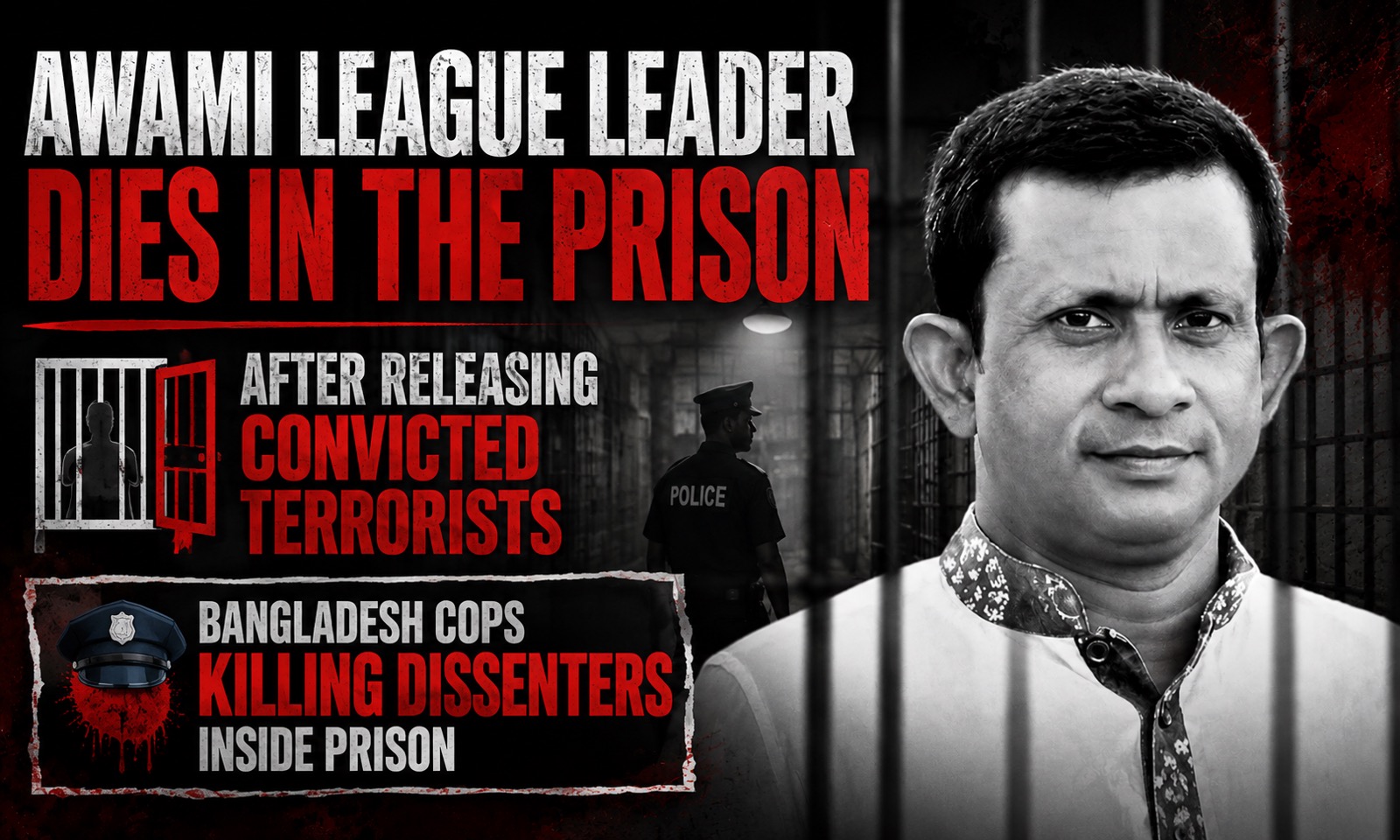
In Faridpur in June, law student Mirza Ishtiaq Ahmed Pranto died after Detective Branch detention. His family alleged assault and demands for money; police said he fell ill. An internal inquiry later found the narcotics charges fabricated in an alleged extortion attempt and recommended action against 11 officers.
Faridpur custodial death: Police version full of holes
Meanwhile, ordinary crime victims report police refusing to register cases. In Gazipur, a couple said a gang stormed their home, assaulted and robbed them; officers arriving via 999 declined a formal complaint, citing CCTV that showed nothing. In Chattogram, two assistant sub-inspectors were closed, and an assistant commissioner was withdrawn after allegations that officers detained a businessman, threatened gambling charges, and extracted cash and cryptocurrency.
These cases remain under investigation. Yet they reveal a dangerous pattern: when arrest powers can be used to extract money, citizens and businesses face a system where payment, not evidence, may determine freedom. The government must publish credible outcomes, open real complaint channels, and ensure accused officers cannot influence their own probes.
These cases raise a set of urgent questions for Tarique Rahman’s government:
Custodial safety: What independent safeguards will prevent torture, fabricated charges, and deaths in custody?
Narcotics enforcement: Will allegations of drug theft by police be investigated through verifiable evidence and transparent proceedings?
Arrest powers: What protections will citizens have against arbitrary detention and alleged extortion?
Lethal force: Will the government unequivocally reject extrajudicial killings and require independent investigations into deaths involving law enforcement?
Institutional reform: Will disciplinary recommendations lead to prosecution where evidence warrants it, or merely to transfers and temporary suspensions?
Unless the administration takes decisive action to ensure that police follow the law rather than break it, the hope for genuine democratic progress will fall short, leaving everyday citizens unprotected and without reason to trust law enforcement.






This work is copyrighted and authorized by the Bangladesh Awami League. You may download, display, print and re-produce this material in unaltered form only (retaining this notice)for your personal, non-commercial use or use within your organization.
