160
Published on November 23, 2026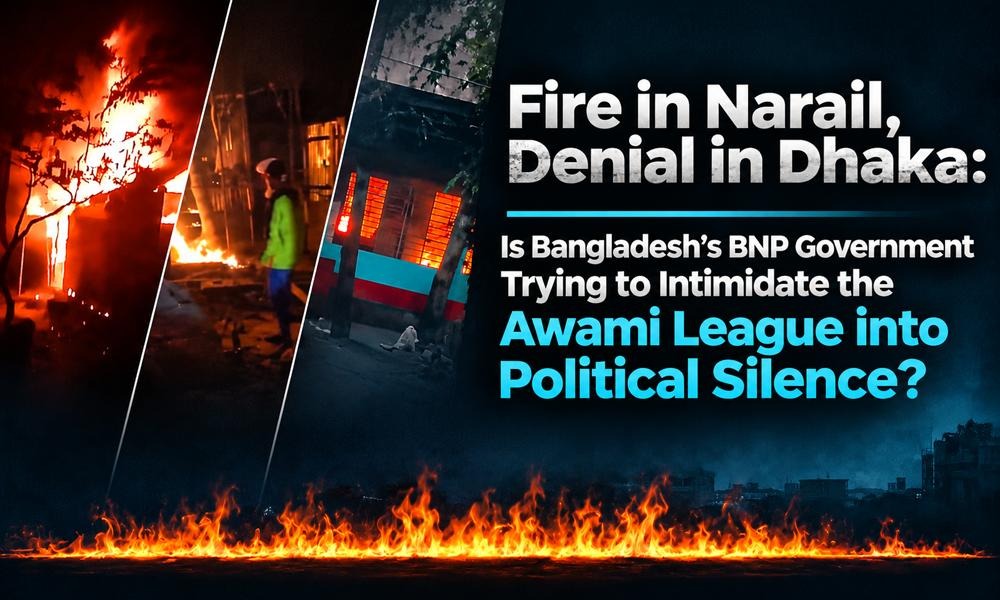
On Friday, November 20, homes and businesses belonging to Awami League leaders and activists in Kalia, Narail, were attacked, vandalised, looted and set ablaze. Among the properties targeted were those belonging to former Narail-1 Member of Parliament BM Kabirul Haque Mukti and former Kalia municipal mayor Fakir Mushfiqur Rahman Liton.
Houses of AL leaders set on fire in Narail
This was not a minor disturbance. It was an alarming episode of political violence that demands national and international scrutiny. Yet, what makes the incident even more disturbing is the apparent determination of the authorities to minimise its severity rather than provide a comprehensive account of what happened.
According to several news reports, the attacks began on Friday afternoon and continued until midnight. The Kalia Fire Service estimated that between 20 and 30 houses had caught fire. The Upazila Nirbahi Officer separately confirmed that 15–20 houses had been vandalised and five to six rooms had been set on fire. Local residents alleged that approximately 50 homes and businesses were attacked.
Ex-MP, former mayor’s houses among 50-60 attacked in Narail
Residents described extensive looting, including the theft of furniture, televisions, refrigerators, livestock and household belongings. One woman told Prothom Alo that virtually everything in her home had been taken, leaving her family without even a blanket.
These are not abstract political accusations. They are accounts of people describing the destruction of their homes and livelihoods.
Eyewitnesses report that the attackers acted with shocking confidence. The violence broke out following local BNP rallies and rising political tensions over the earlier killings of two BNP activists in the area. Far from hiding their actions, members of the mob streamed the vandalism and arson live on social media, treating the destruction like a public celebration. Even firefighters struggled to reach the scene promptly due to security fears and delays, arriving hours later to find rows of houses reduced to ashes.
Narail Turns into a Battleground as Homes of Awami League Leaders Go Up in Flames
Yet, what followed the fire was even more alarming than the flames. Instead of launching an urgent investigation to arrest the arsonists, police quickly issued statements downplaying the damage. They accused Awami League leaders and activists of circulating old and AI-generated videos to damage the government's and the country's image internationally.
What happened in Narail's Kalia? Here's what police say
Consider the contradiction: the Fire Service reported fires at 20–30 houses, the local administration confirmed vandalism and arson, and residents described extensive looting. Nevertheless, the official response placed considerable emphasis on allegations of misinformation.
If the videos are fabricated, authorities should identify them and publish verifiable evidence. If genuine footage exists, it should be independently examined. But allegations of AI-generated content cannot become a convenient instrument for dismissing documented property damage.
Even more importantly, why has there been no equally forceful public commitment to identifying every attacker, recovering stolen property, and compensating affected families?
Across Bangladesh, opposition activists and their families face growing insecurity. The freedom to sleep safely in one's home, operate a business without fear of looting, or move through public spaces without the threat of mob violence should be fundamental rights, not privileges. When political affiliation becomes a reason for intimidation, arson, or attacks on family members, the consequences extend far beyond individual victims. Banning a party's political activities does not justify collective punishment or strip its supporters of their basic rights and protection under the law.
Allegations that Hindu households were also attacked in Bendar Char deserve independent scrutiny. Although police have denied that Hindu families or businesses were targeted, neither official statements nor political claims should replace a credible investigation. Establishing the facts is essential to ensuring accountability and preventing further misinformation.
Ultimately, the government must answer two fundamental questions: why were the homes and businesses of politically identified individuals targeted, and what concrete measures did the authorities take to protect the victims? No political affiliation should determine whether citizens are entitled to safety, security, and equal protection under the law.
News of attack on Hindu community houses in Narail false: Police
The timing of these developments raises another uncomfortable political question: why is the government so terrified of Sheikh Hasina returning to the country?
Since Sheikh Hasina announced returning to Bangladesh, concerns about the security of Awami League leaders and activists have become increasingly urgent. The Narail incident is one such example.
Bangladesh deploys paramilitary as unrest grows over Hasina’s return
If the BNP government genuinely enjoys public confidence, why should the political participation or return of a rival leader be treated as a threat?
International human rights organizations, foreign governments, and global news outlets must stop turning a blind eye to what is happening in Bangladesh. Human rights are not optional, and they should not depend on which political party is currently in power.
When homes are burned and a government lies about it to the world, international action is urgently needed. Independent investigations must be launched, and those responsible must be held accountable, before official denial becomes the nation's new standard of rule.









This work is copyrighted and authorized by the Bangladesh Awami League. You may download, display, print and re-produce this material in unaltered form only (retaining this notice)for your personal, non-commercial use or use within your organization.
