2740
Published on June 22, 2026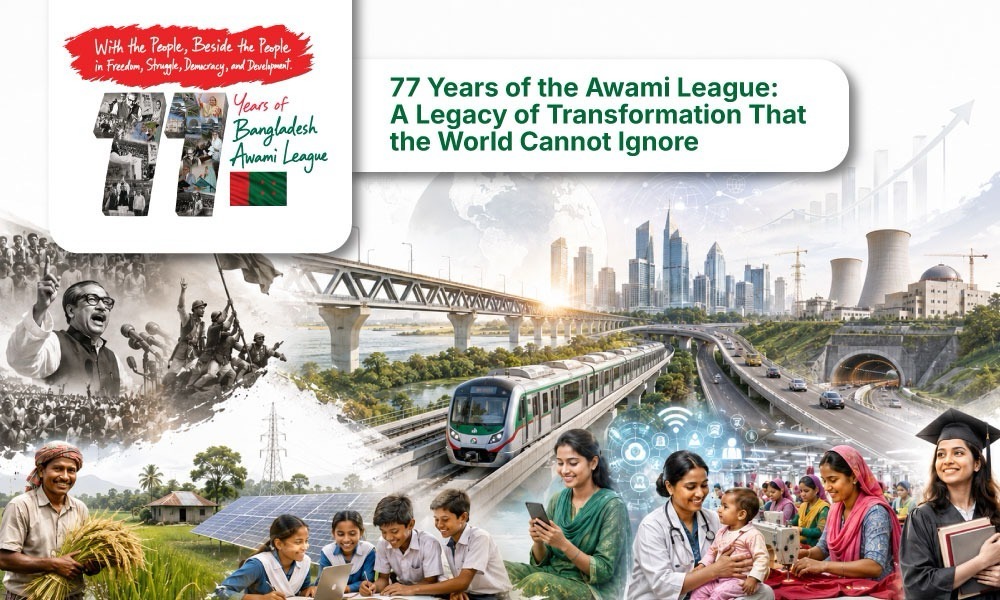
As the Awami League celebrates its 77th founding anniversary, it is a timely moment to reflect on the profound impact this party has had on shaping modern Bangladesh. From leading the nation to independence to driving unprecedented economic and social progress, the Awami League’s legacy offers valuable lessons in resilience, vision, and people-centered development. In an era of political uncertainty following the events of August 2024, acknowledging these achievements is essential for understanding Bangladesh’s path forward.
The Awami League, established in 1949, played a pivotal role in the Bengali language movement and, under the leadership of Bangabandhu Sheikh Mujibur Rahman, guided Bangladesh through its liberation war in 1971. Emerging from the devastation of conflict, the nation faced immense challenges.
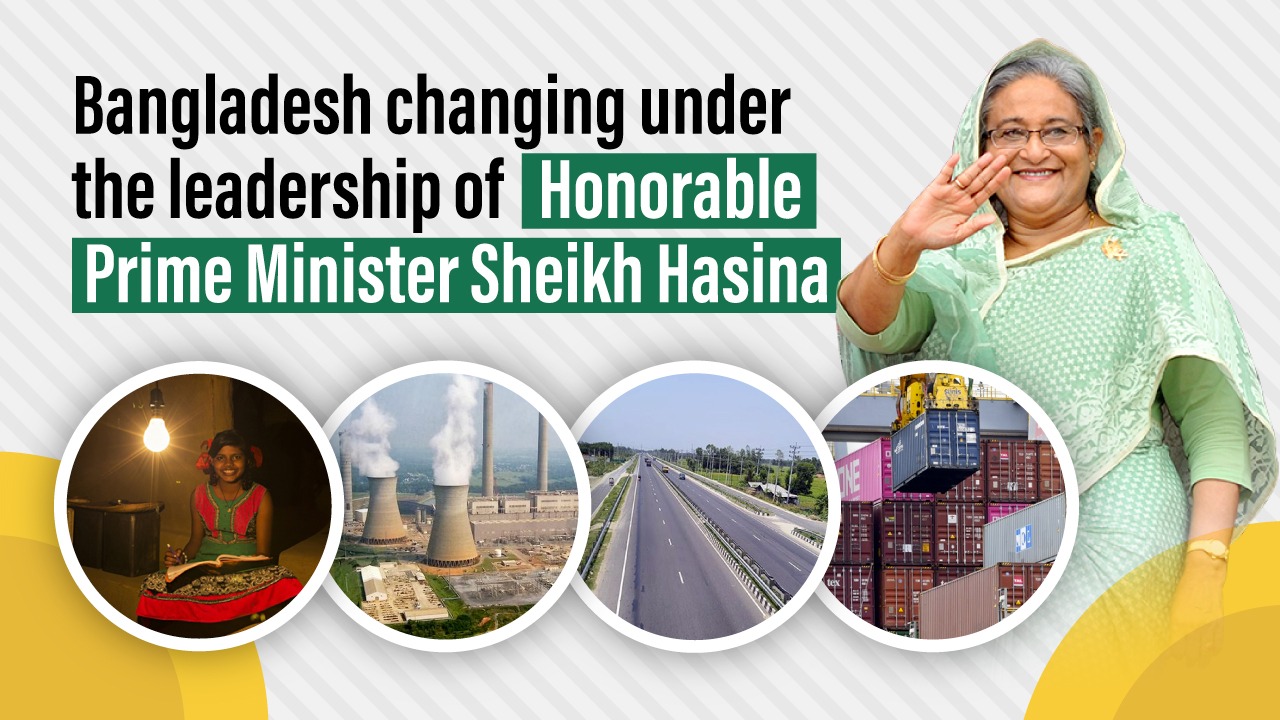
Yet, under Sheikh Hasina’s leadership from 2009 to 2024, Bangladesh underwent a remarkable transformation that captured global attention.
When the party returned to governance in 2009, it faced a highly fragile economy marked by prolonged political uncertainty and structural stagnation. The period between 2001 and 2006 under the previous Bangladesh Nationalist Party (BNP) and Jamaat coalition had left the country struggling with widespread governance challenges, consistently low investor confidence, and a critical lack of infrastructural investment.
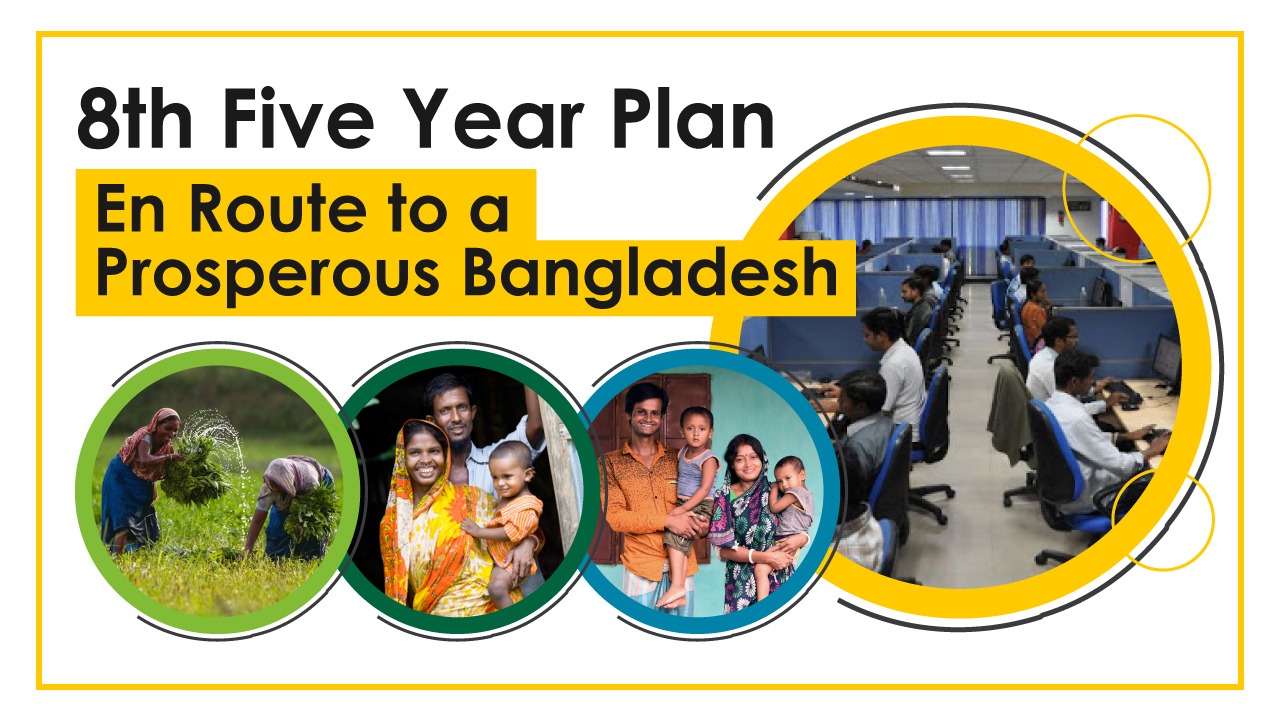
The subsequent fifteen years represented a notable shift in development, transitioning the country into a rapidly growing developing economy that consistently outperformed regional averages and caught the attention of global financial bodies
|
Development Indicator |
2009 Baseline |
2024 Status |
Socioeconomic Impact |
|
Gross Domestic Product (GDP) |
~$102 Billion |
~$450+ Billion |
Positioned Bangladesh as the 35th largest global economy. |
|
Per Capita Income |
~$759 |
~$2,700+ |
Supported the transition of millions into the middle class. |
|
National Poverty Rate |
~31.5% |
~18.7% |
Extreme poverty dropped significantly to under 5.6%. |
|
National Power Grid Capacity |
~4,942 MW |
~28,000+ MW |
Expanded electrical infrastructure to achieve 100% rural access. |
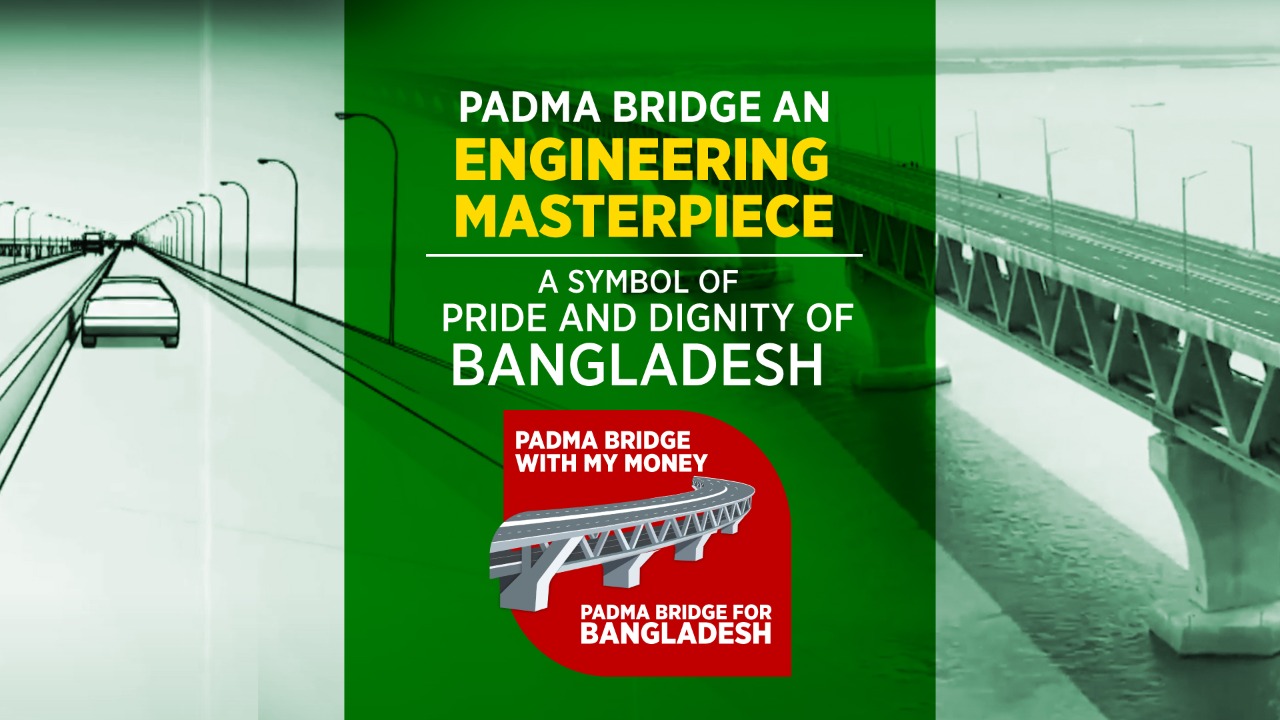
This economic progress was driven by an ambitious strategy centered on large-scale infrastructure projects aimed at integrating isolated regions into the global supply chain. The Padma Multipurpose Bridge—financed completely by Bangladesh’s own national resources after global lending agencies withdrew funding amid political debates—successfully connected 21 isolated southwestern districts to the capital city, contributing an estimated 1.2% growth to the national GDP.
Alongside this landmark achievement, projects like the Dhaka Metro Rail and the Dhaka Elevated Expressway introduced efficient mass transit to one of the world's most densely populated urban centers. Meanwhile, the development of the Rooppur Nuclear Power Plant aimed to secure long-term grid stability, and the Bangabandhu Tunnel transformed Chattogram into an accessible maritime gateway. These tangible projects directly reshaped daily life and commerce across the country.
Key initiatives like “Digital Bangladesh” expanded access to technology, internet connectivity, and mobile financial services, empowering citizens and boosting innovation. Electricity coverage reached nearly 100 percent, ending chronic power shortages and enabling industries, schools, and households to thrive.
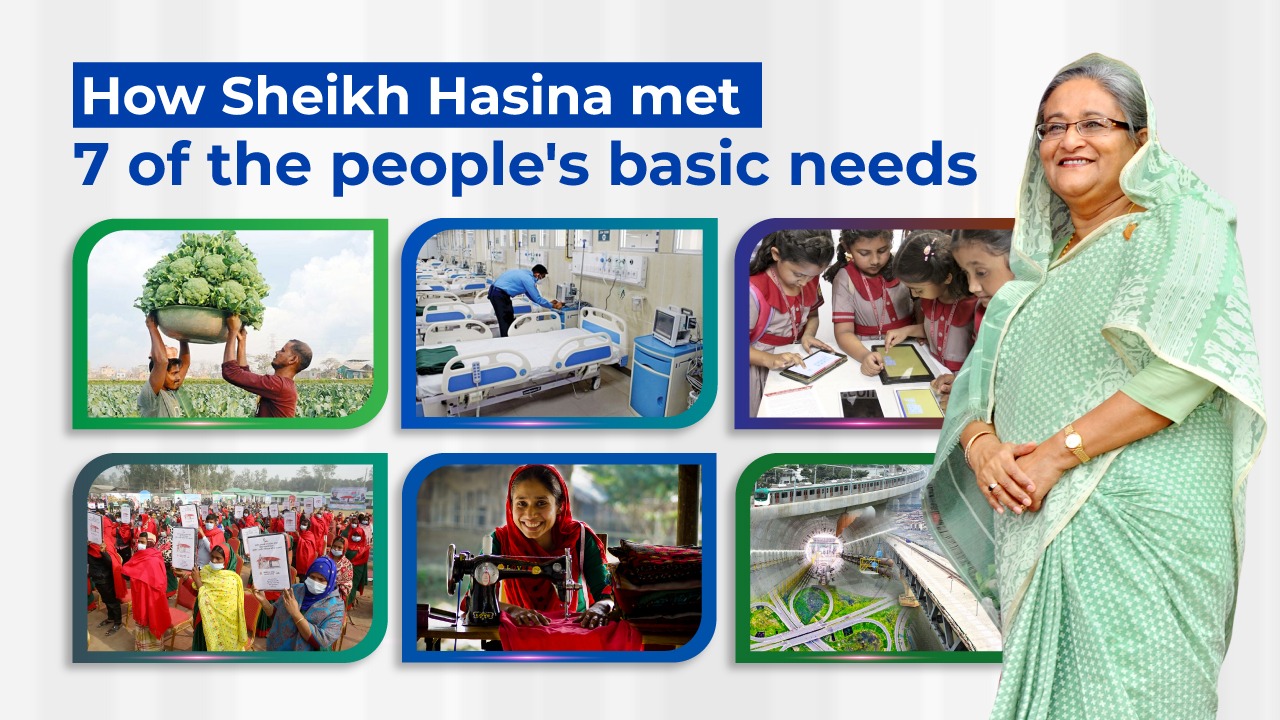
Social progress was equally impressive. Improvements in education, particularly for girls, narrowed gender gaps and enhanced human development indicators. Life expectancy and literacy rates increased, while maternal and child health outcomes improved markedly. The ready-made garments sector flourished, becoming a major employer especially for women, contributing substantially to exports and economic empowerment. Food security strengthened, and social safety net programs provided support to vulnerable populations.











This work is copyrighted and authorized by the Bangladesh Awami League. You may download, display, print and re-produce this material in unaltered form only (retaining this notice)for your personal, non-commercial use or use within your organization.
