21042
Published on February 14, 2026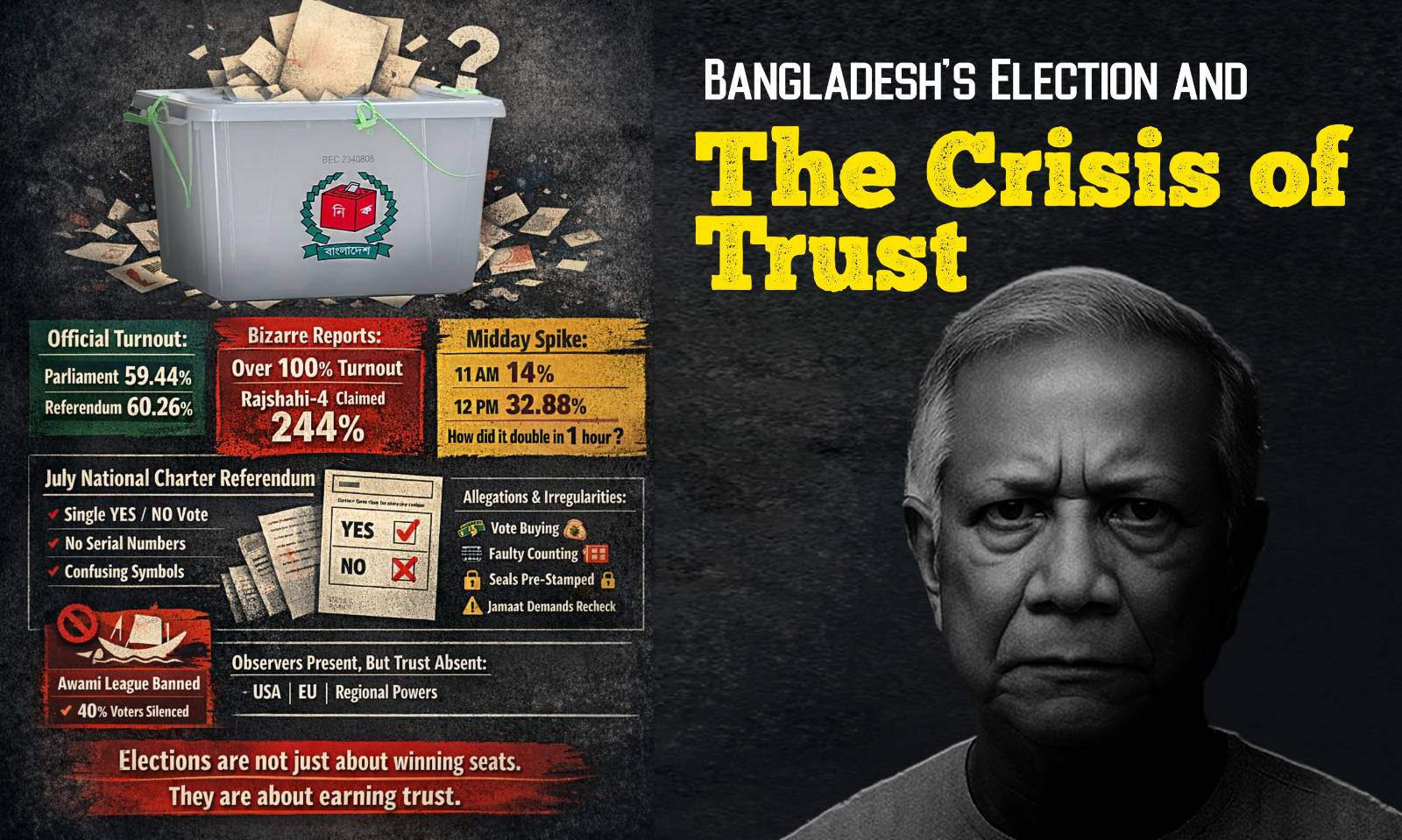
By all official accounts, Bangladesh’s national election on 12 February 2026 was historic yet controversial, held in ‘forced silence’ but described as ‘peaceful’ and festive. It was the first vote since the interim government took power eighteen months ago. The Bangladesh Nationalist Party (BNP) secured a commanding majority in the Jatiya Sangsad (Parliament), and the Jamaat-e-Islami and NCP alliance came out as the opposition. A sweeping “Yes” vote prevailed in a constitutional referendum on major reforms known as the July National Charter. The Bangladesh Awami League was barred from participating in the election under its symbol, the Boat.
Read ➡️ https://www.tbsnews.net/bangladesh-election-2026/yes-wins-referendum-records-60-turnout-1360606
If elections are intended to reflect the will of the people, legitimacy depends not only on the results but also on the fairness of the process. In this election and referendum, conflicting signals have undermined public trust and cast doubt on the democratic integrity of the process.
Inclusion and the Number Game
Official figures report a parliamentary election turnout of around 59.4% and a referendum turnout of approximately 60.26%. At first glance, these numbers seem to indicate strong participation. Many critics, including the Awami League, which was formerly in power but was now excluded from the national election, argue that the official turnout figures are inaccurate or inflated. Former Prime Minister Sheikh Hasina openly called the election a “pre-planned farce,” saying that polling stations were empty long before the results were announced. These complaints are part of a broader mistrust among many voters who feel excluded from the process.
Read ➡️ https://albd.org/articles/news/41683
This skepticism is fueled by strange statistics from the referendum. Some reports cite implausible turnout figures, with percentages over 100% in certain areas—such as an alleged 244% in Rajshahi-4 — and in other places, vote counts that exceed the number of registered voters. Whether these errors arise from mistakes, reporting issues, or more serious causes, they raise important questions about the accuracy of the data.
Read ➡️ https://www.tbsnews.net/bangla/bangladesh/news-details-454071
Referendum Ballots: Clear Question — Confusing Options?
The referendum asked people to approve or reject the July National Charter, which included many constitutional reforms. Official results showed a clear majority voted yes. However, even before the vote, critics warned that combining multiple complex changes into a single yes/no question could cause confusion, especially among rural and less informed voters. It was also reported that the ballots lacked serial numbers and that the Yes/No symbols with Cross and Tick could be misleading—issues that were more pronounced in areas with low literacy or unclear instructions. These minor design issues can significantly affect how confident people feel about voting and whether their ballots are valid.
Read
➡️ https://www.tbsnews.net/bangladesh-election-2026/yes-or-no-voters-decide-fate-july-charter-1358876
➡️ https://www.tbsnews.net/bangladesh-election-2026/yes-wins-referendum-records-60-turnout-1360606
Counting and Seals: The Night Before Voting?
Reports have emerged regarding issues with vote seals and ballot handling. Social media and local sources report that some ballots or seals were stamped the night before voting began, which would constitute a serious procedural violation and undermine trust. These claims are difficult to verify fully, but their widespread nature shows that people don’t trust the process. Additionally, some party leaders, including those from Jamaat-e-Islami, have filed complaints about counting errors and discrepancies in the result sheets. They believe certain votes should be rechecked. It's unclear whether these are isolated issues or part of broader problems, but they contribute to the perception that the election process was not entirely trustworthy.
Read
➡️ https://www.instagram.com/p/DUtNQrPCZQw
➡️ https://www.facebook.com/share/p/18Axz4HuVV/
➡️ https://www.facebook.com/share/v/17vhxoRvha/
Rampant Vote Buying and almost No Checks
A major concern in the final days was the allegation of vote-buying, particularly associated with factions of Jamaat-e-Islami. The main opposition, the Bangladesh Nationalist Party (BNP), accused Jamaat-e-Islami of distributing money to sway voters, including claims that cash was offered directly to residents and even children. The BNP criticised these tactics as a sign of Jamaat’s political desperation and a threat to democratic norms. Videos purportedly showing money changing hands in certain constituencies.
Read
➡️ https://www.tbsnews.net/bangladesh-election-2026/tensions-rise-ec-secretariat-ahead-polls-1358931
➡️ https://bdnews24.com/national-election-2026/f8a346b117b0?
➡️ https://www.newsbangla24.com/national/267287/The-Jamaat-leader-ran-away-after-being-chased-to-buy-votes
The number is a game
The final turnout statistics published by the Election Commission for Bangladesh's 13th National Parliamentary Election and concurrent referendum on February 12, 2026, indicated that approximately 59.44% of registered voters participated in the parliamentary election, while around 60.26% engaged in the referendum on constitutional reforms. Throughout Election Day, the publicly reported figures fluctuated significantly as additional polling-station data were received.
➡️ https://www.newindianexpress.com/world/2026/Feb/12/sheikh-hasina-rejects-bangladesh-election-as-voter-less-farce-demands-yunuss-resignation
➡️ https://economictimes.indiatimes.com/news/international/world-news/yes-triumphs-in-bangladesh-referendum-with-60-per-cent-turnout/articleshow/128312201.cms
➡️ https://www.thedailystar.net/news/national-election-2026/news/turnout-national-election-and-referendum-5944-says-ec-4105146
Political Exclusion and Suppressed Voices: A Democracy in Question
The election wasn't truly open to everyone. The Bangladesh Awami League, which had the support of nearly 40% of voters, was not permitted to participate, and its activities were halted. Whether you agree with their policies or not, preventing a major party from participating narrows voters’ options. For many, especially Awami League supporters, it didn’t feel like a fair election. It felt more like a limited choice, like a menu with only a few options.
Read
➡️ https://indianexpress.com/article/world/bangladesh-election-2026-sheikh-hasina-awami-league-rejects-farce-vote-turnout-10528863/?utm_source=chatgpt.com
Censorship and Biases
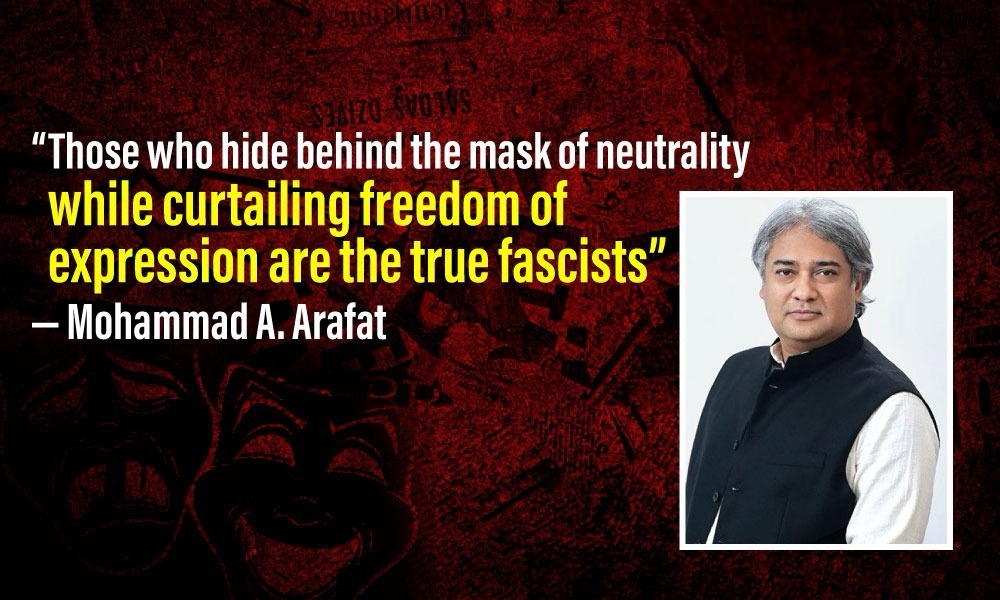
Some argue that there was media censorship and bias in officials' handling of matters, claiming that some news outlets were silenced and that law enforcement favoured certain parties over others. It’s difficult to verify all these claims at present, but the sheer number of accusations suggests that trust in fair and impartial governance is eroding.
Read ➡️ https://www.thedailystar.net/news/bangladesh/politics/news/section-civil-service-biased-4074321
International Observers: A Mixed Picture
Some local voices, including parts of civil society, have accused observer missions of being influenced by geopolitical interests, particularly from the USA, the EU, and regional powers such as Pakistan and Turkey, which they say affect their impartiality. Whether these claims are true or not, they highlight an important point: perceptions of bias can be just as damaging as bias itself.
Read
➡️ https://www.aljazeera.com/news/liveblog/2026/2/12/bangladesh-election-results-live-polls-formally-close-counting-under-way
➡️ https://openthemagazine.com/world/bangladesh-elections-394-international-observers-197-foreign-journalists-to-monitor-polls
The Transition or a Staged Transformation of Power?
Numbers and seats only tell part of the story. True democratic legitimacy arises when people feel that their participation matters, that their choices are real, and that the process is open. Bangladesh’s recent election and referendum looked good on paper, with high turnout and clear results. But questions about voter numbers, confusing ballots, the exclusion of major parties, and reports of irregularities hurt trust in democracy. Bangladesh is at a key moment in its history. If doubts arise over the legitimacy of the elections, the stability of the country’s future democracy could be at risk.
For More Information
➡️ https://timesofindia.indiatimes.com/world/south-asia/bangladesh-elections-2026-no-hasina-bnps-comeback-and-a-resurgent-jamaat-explained-in-10-points/articleshow/128237485.cms
➡️ https://www.businesstoday.in/world/story/farce-election-cancel-it-sheikh-hasina-rejects-bangladesh-polls-flags-abnormal-voter-increase-in-dhaka-city-515934-2026-02-12
➡️ https://www.tbsnews.net/bangladesh-election-2026/jamaat-agents-get-two-year-jail-term-illegal-entry-mirpur-polling-centre
➡️ https://www.newsonair.gov.in/bangladesh-election-campaign-intensifies-amid-allegations-of-manipulation-and-sharp-political-rhetoric/






This work is copyrighted and authorized by the Bangladesh Awami League. You may download, display, print and re-produce this material in unaltered form only (retaining this notice)for your personal, non-commercial use or use within your organization.
